In-House Venue AV vs. Hired AV Production: What Event Planners Need to Know
You have booked the venue, locked in the date, and started building the guest list. Then the venue coordinator slides a contract across the table with a line item that reads: In-House AV Services — $4,800. You have two options: sign it as-is, or hire your own AV production team. Most event planners accept the in-house option by default — it is easier, it feels safer, and the venue rep makes it sound like the obvious choice. But for events that need to land well — whether that is a corporate conference, a high-end wedding, or a product launch — defaulting to in-house AV is often the most expensive mistake you will make.
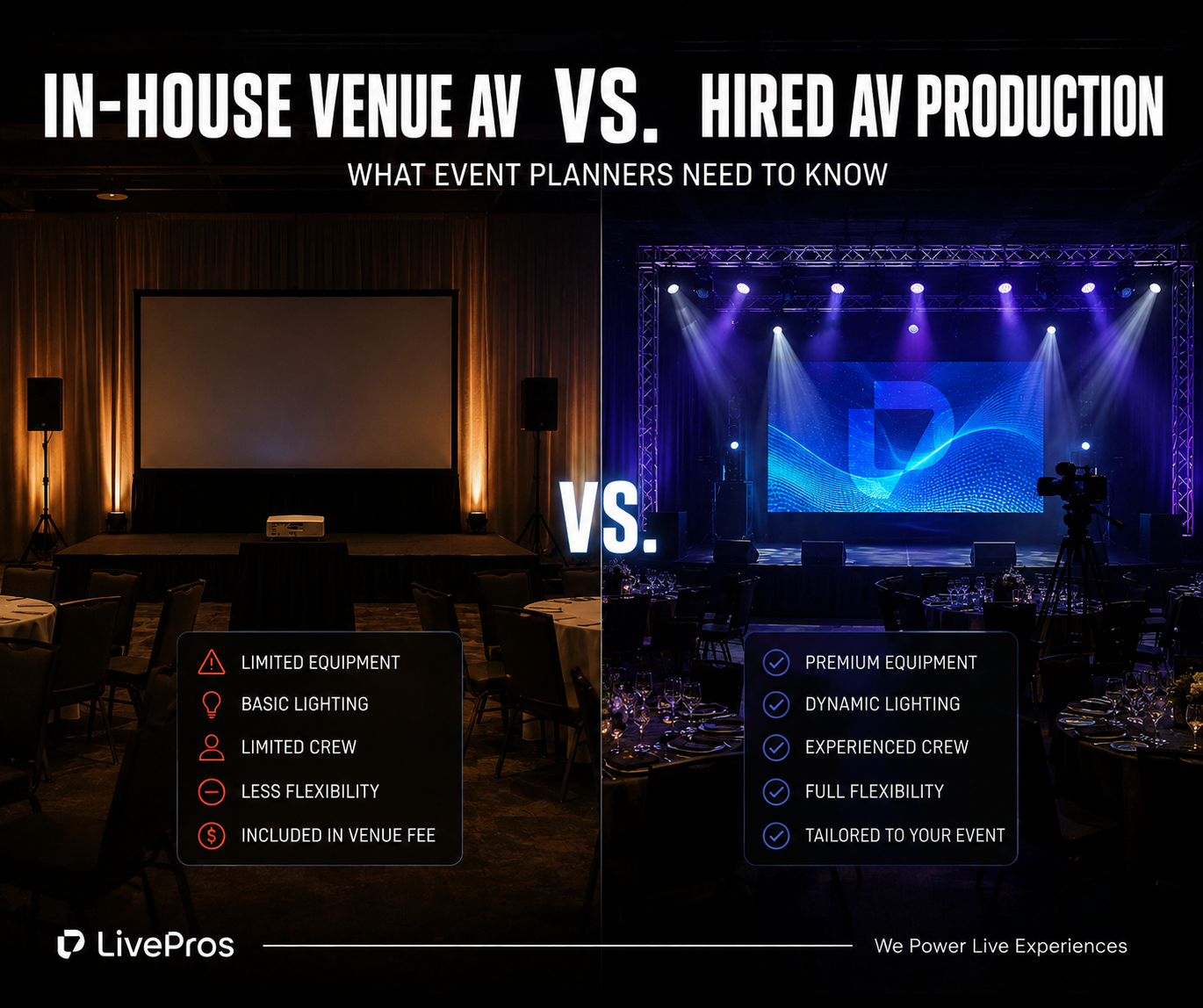
When a venue offers in-house AV, it typically means one of two things: they own a basic equipment package included or charged separately with your rental, or they have an exclusive contract with a third-party AV vendor who operates on their property. In either case, the setup is optimized for the venue's lowest common denominator — the average booking. That might mean a projector and a screen that works fine for a 50-person board meeting, but falls completely flat for a 300-person product launch where your CEO needs to look flawless on camera.
In-house AV equipment also tends to age. Venues do not refresh gear on an event-production timeline. A wireless microphone system that was cutting-edge in 2019 now competes with a lot more radio frequency interference and may not meet the reliability standards your event requires.
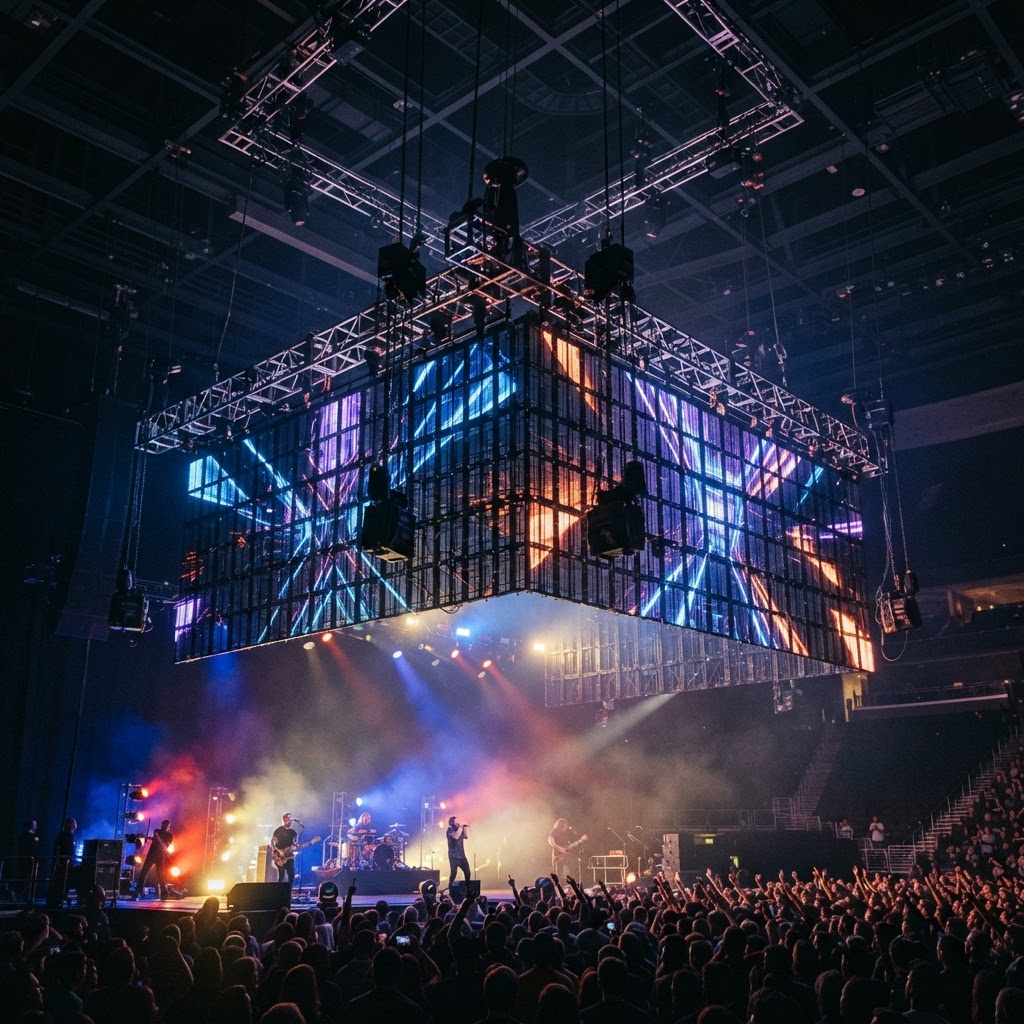
An independent AV production company like Live Pros arrives at your event with three things a venue's in-house team rarely has: current equipment, a team that is accountable only to you, and the ability to customize everything. Current, event-grade gear means P1.6–P2.6 pixel pitch LED walls that render crisply in intimate spaces — not a blurry rented projector on a pull-down screen. For audio, it means line arrays and digital consoles sized to your room and your crowd, not whatever the venue keeps in a closet.
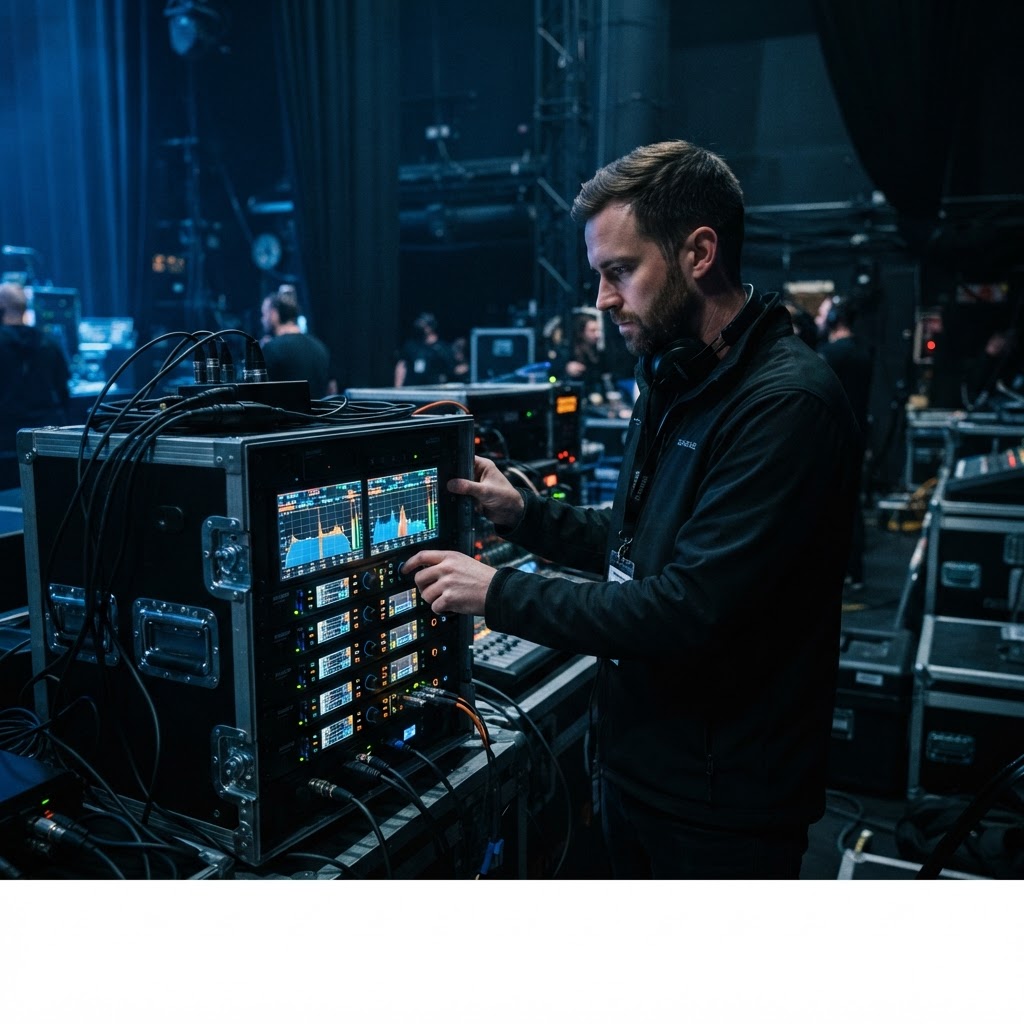
A team working for you, not the venue. In-house AV operators split their attention across the building. On a busy weekend, one technician may be managing two or three events simultaneously. When you hire your own production team, every person in that room is focused on your event from load-in to strike. That single-client accountability changes the quality of every interaction — from site walk to rehearsal to the moment your keynote begins.
In-house AV often looks cheaper on paper. It rarely is in practice. Venues that offer exclusive in-house AV vendors typically build margin into that relationship — you may be paying a venue markup on top of the vendor's rate without the ability to negotiate directly. There is also the cost of what goes wrong. In-house AV teams are rarely staffed for problem-solving on complex productions. If a microphone drops during your keynote or a projector bulb burns mid-presentation, the fix depends on what spare equipment happens to be in the building that day. A dedicated production company loads in redundancy as standard practice.
The biggest hidden cost is the reputational one. A guest who cannot hear the speaker, a client who watches your brand video in low resolution on a washed-out screen, or a recording that comes back with unusable audio — these are costs that do not show up on the AV invoice. The calculus shifts the moment your event has a significant visual or audio component, a live or recorded element, multiple rooms or stage configurations, or any expectation that guests will judge the production quality.
The best AV setup for your event is the one that serves your guests, protects your brand, and gives your speakers and performers the support they need to do their best work. That is the actual job. Hiring your own production company does not have to mean friction with the venue — it means you have one company that is fully accountable for the quality of your event's technical execution.