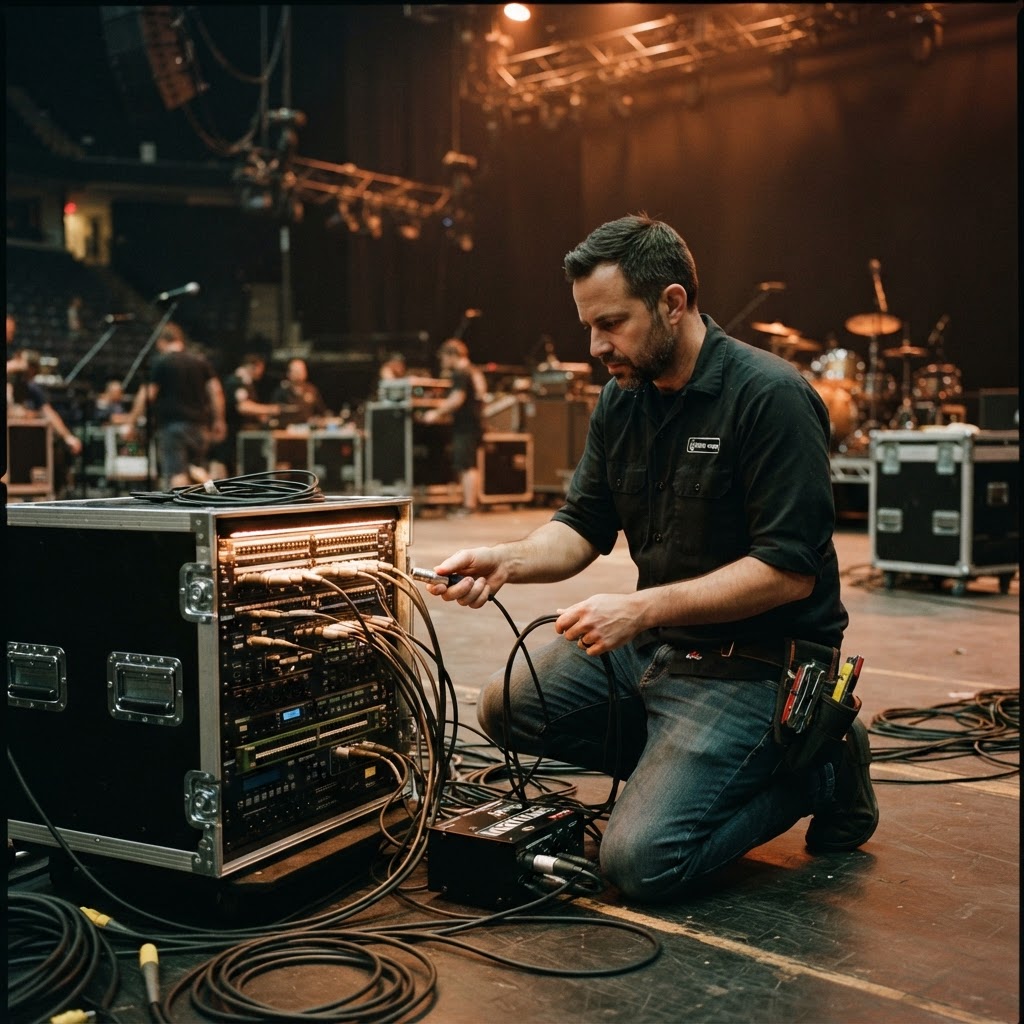
12 Power Questions to Ask Your Venue Before You Sign the Contract
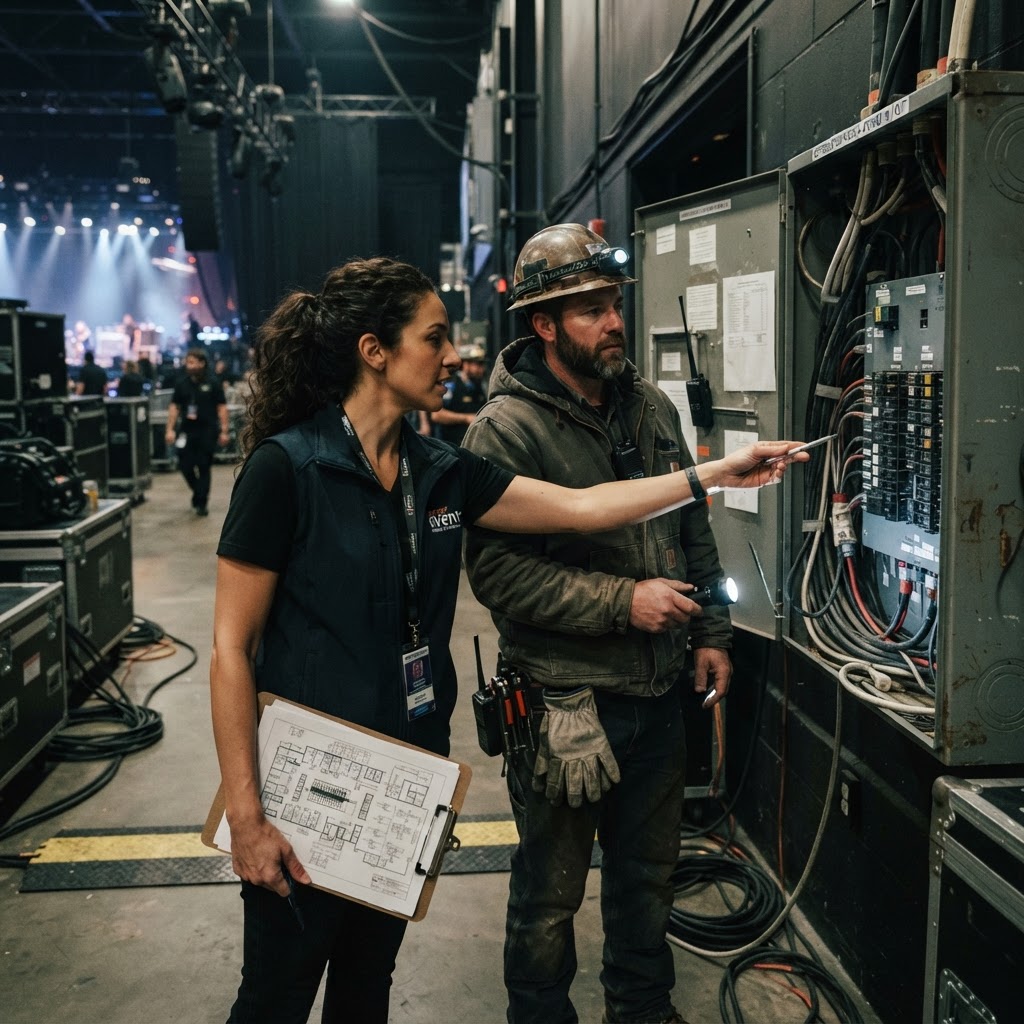
Most venue contracts get signed before anyone asks a single real question about power. The room looks right, the date works, the catering minimum is acceptable, so the contract moves forward. Then load-in day arrives, the house electrician explains the ballroom only has two 20-amp circuits per wall, and the production team is scrambling to find a generator six hours before doors. The questions below belong in the site walk and in the contract rider, not in a panicked phone call the morning of the show.
Start with the basics: how many amps are available at the stage or booth location, and is that power 120V single-phase or 208V three-phase? A single 20-amp circuit gives you roughly 2,400 watts of usable power — fine for a laptop and a projector, not enough for a line array, an LED wall, and stage lighting running off the same panel. Ask for the actual panel schedule, not a verbal estimate, and confirm where that panel physically sits relative to your stage. A 150-foot cable run from panel to load drops voltage and eats into your safety margin, and it changes what gauge cable your audio production and lighting teams need to bring.
Next, find out whether those circuits are dedicated or shared. Convention centers and hotel ballrooms routinely run kitchen equipment, HVAC units, and escalators off circuits that also feed meeting rooms. A commercial ice machine or coffee urn kicking on mid-presentation can trip a breaker that's also carrying your wireless mic receivers. Ask the venue directly: what else is on this circuit, and can it be isolated for the duration of my event? If they can't answer, that's your signal to request dedicated distro instead of relying on house power at all.
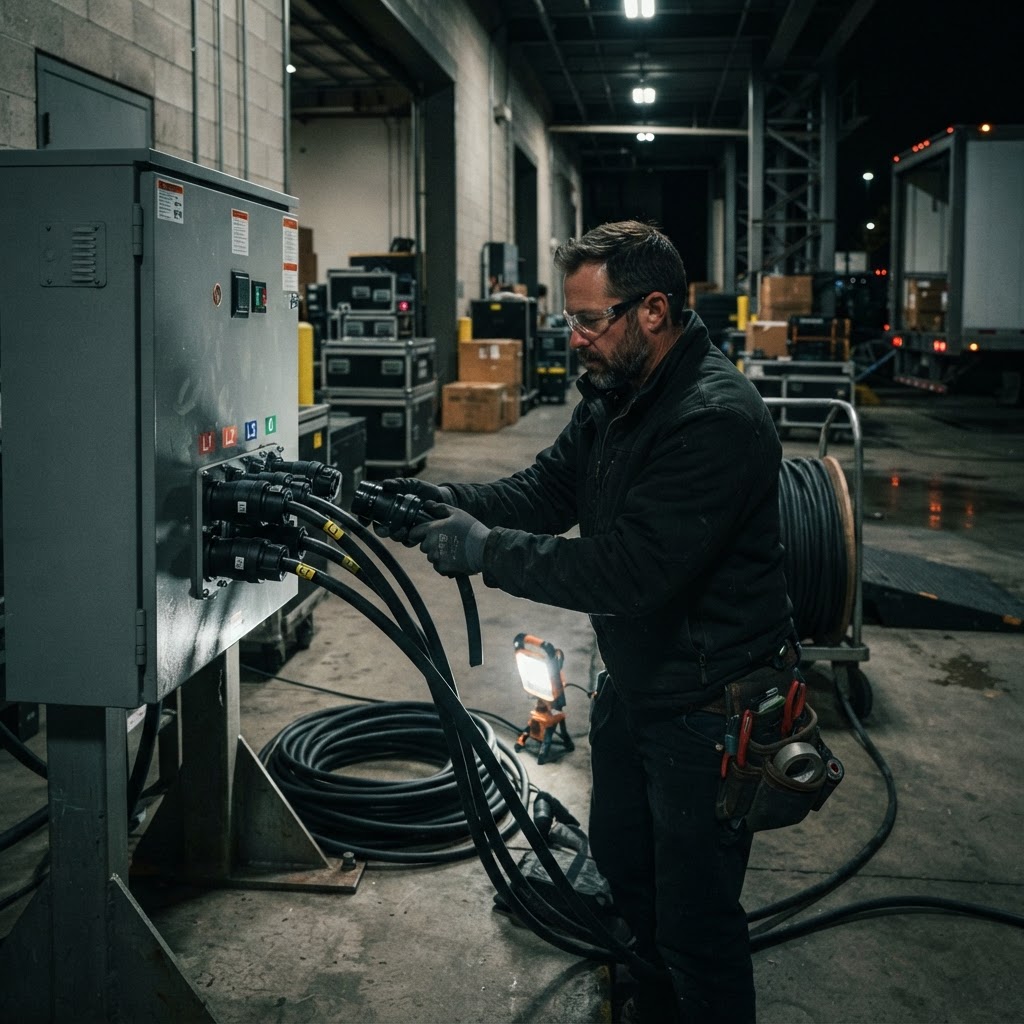
Ask who owns the tie-in and who's allowed to touch it. Most venues require a licensed, often union, electrician to perform any tie-in to house power above a certain amperage, and that labor is billed separately from your room rental — sometimes at a flat fee, sometimes hourly with a four-hour minimum. Get the exact rate in writing, including overtime thresholds, because a tie-in scheduled for 6 a.m. load-in can trigger premium rates you didn't budget for. This is also the moment to confirm whether the venue supplies camlock distro or whether your production company needs to bring its own, which affects your equipment rental order.
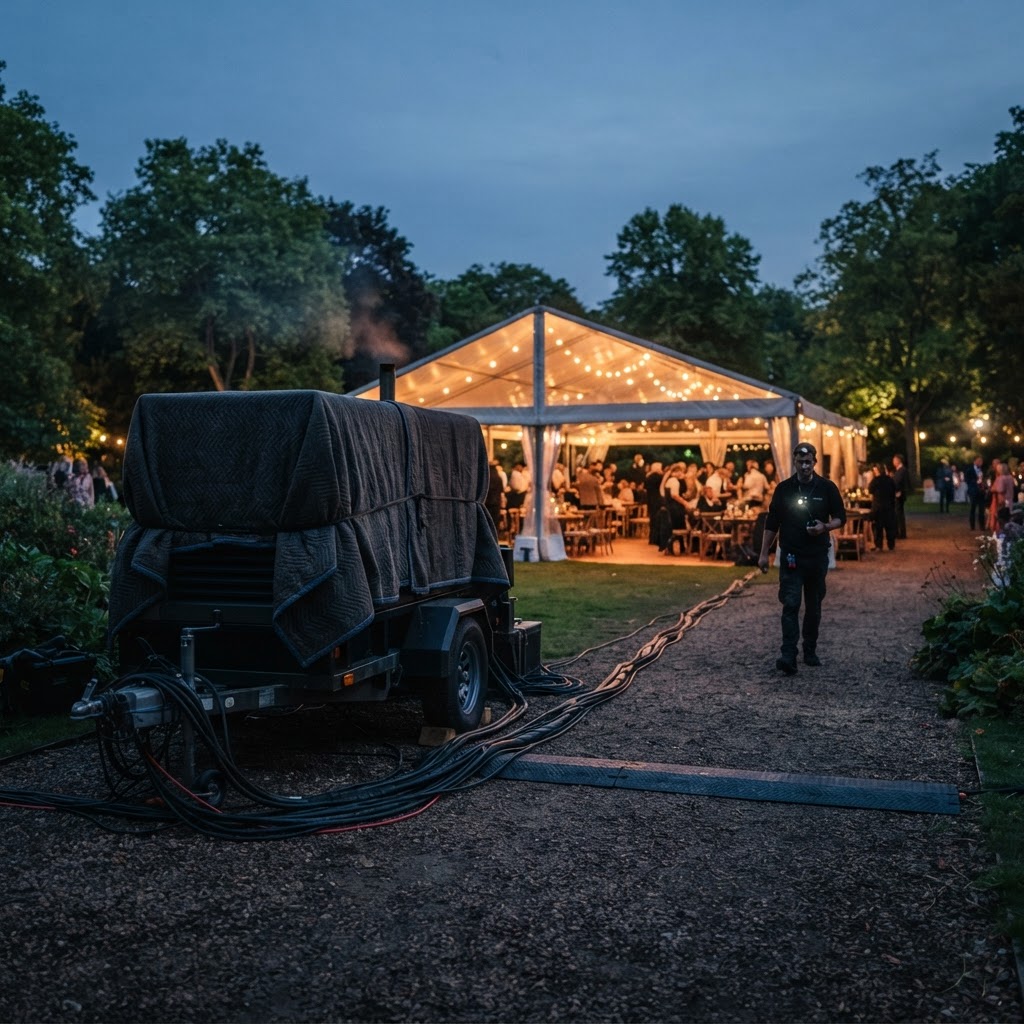
If your event's power draw exceeds what the venue can provide — common with larger LED video walls or multi-zone sound systems — ask where a generator can be staged. Some venues have no exterior space for one; others require generators to sit a minimum distance from doors and windows for exhaust and noise reasons, which can push your genny far enough away that cable runs become a separate line-item cost. Confirm this before you sign, not after your production plan is already built around a specific generator size and placement.
Load-in timing matters just as much as amperage. Ask whether power can be energized before your contracted load-in window starts — a 7 a.m. call time means nothing if house electricians don't arrive until 8. Also confirm freight elevator and loading dock access, since distro cable, truss, and LED panels all need a path from the truck to the stage that doesn't involve a public lobby or a flight of stairs. These access details drive your actual crew call time far more than the published venue hours do.
Ask what happens if your power needs change after the contract is signed — because they usually do. A client adds a second LED wall, the band brings their own backline, or the keynote speaker's video package needs a dedicated feed. Find out whether the venue allows power upgrades after signing without a full contract renegotiation, and what the change-order fee looks like. It's far cheaper to build in a buffer now than to discover a week before the event that additional circuits require a 30-day notice you've already missed.
Before any of these conversations, run your actual numbers. Use a power and sound estimate or an LED wall planning tool to know your real draw in amps, not watts, before you ask the venue what they can provide. Showing up to a site walk with
I need roughly 100 amps of 208V three-phase at the stage, split across four circuits,
gets you a straight answer. Showing up asking vaguely
is this room big enough for our AV?
gets you a vague one, and vague answers are exactly what cause problems on event day.
Get every answer attached to the contract as an addendum or rider, not left as a verbal assurance from a sales manager who won't be on-site the day of your event. Corporate activations, trade shows, and galas all live or die on details nobody thinks to document, and power is the most common gap between what a venue promises and what a production team actually finds on load-in day. Whether you're planning a corporate event, a brand activation, or a wedding, bring this list to the site walk, write down the answers, and have your production partner review the panel schedule before you commit to a date.