Lavalier, Handheld, or Headset? Matching Mic Type to the Speaker, Not the Room
Planners usually pick a microphone type the same way they pick a centerpiece — based on how it looks. That's backwards. A lavalier on a fidgety presenter who turns their head mid-sentence drops level constantly. A handheld in the hands of a nervous first-time speaker ends up six inches from their chest instead of their mouth. The right choice comes from how the speaker behaves on stage, not from a styling preference, and getting it wrong is the single most common reason corporate keynotes sound inconsistent.
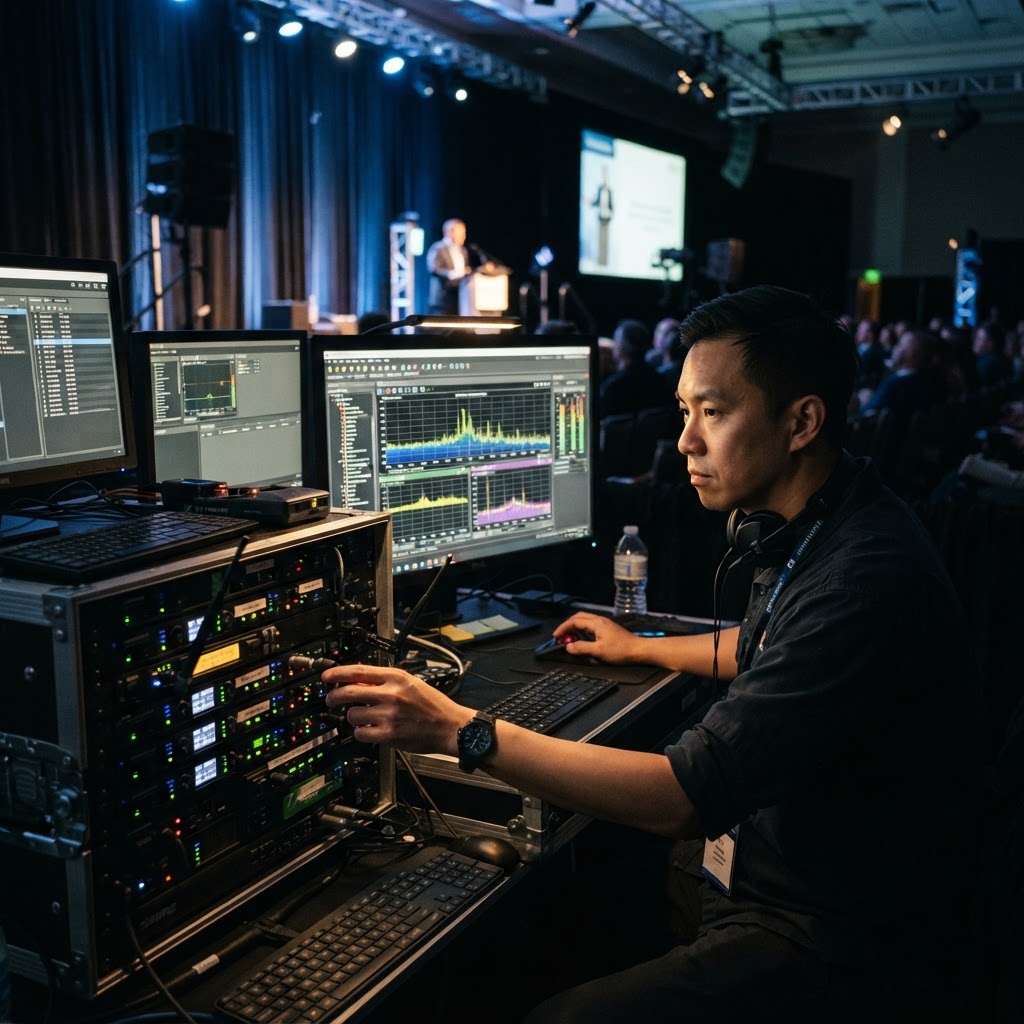
Lavalier mics clip to a lapel or collar, sit six to eight inches below the chin, and use an omnidirectional capsule to pick up sound from a wide angle so small head turns don't tank the level. They're the right call for seated panels, fireside chats, and speakers who stay mostly still behind a podium or in a chair. The tradeoff is proximity to clothing: silk, sequins, lanyards, and starched collars all create rustling noise against the capsule, and a lav mounted too close to a necklace will pick up every movement. Belt packs also need a clear RF path to the receiver, which is why coordinating wireless frequencies matters as much as mic placement once you've got more than two or three lavs running at once.
Handheld mics trade that forgiving pickup pattern for gain. A cardioid or supercardioid capsule rejects sound from the sides and rear, which means it can run louder before feedback becomes a problem — critical in rooms with hard surfaces or when the PA has to cover a large floor. Handhelds are the right tool for emcees who walk the stage, award presenters, auctioneers, and anyone doing audience Q&A where the mic needs to move to wherever the question is. The catch is technique: the capsule has to stay close to the mouth, roughly two to four inches, and most non-professional speakers drift. If you know your speaker will hold the mic at chest height while talking, budget for a handheld with a tighter pattern and plan your gain accordingly.
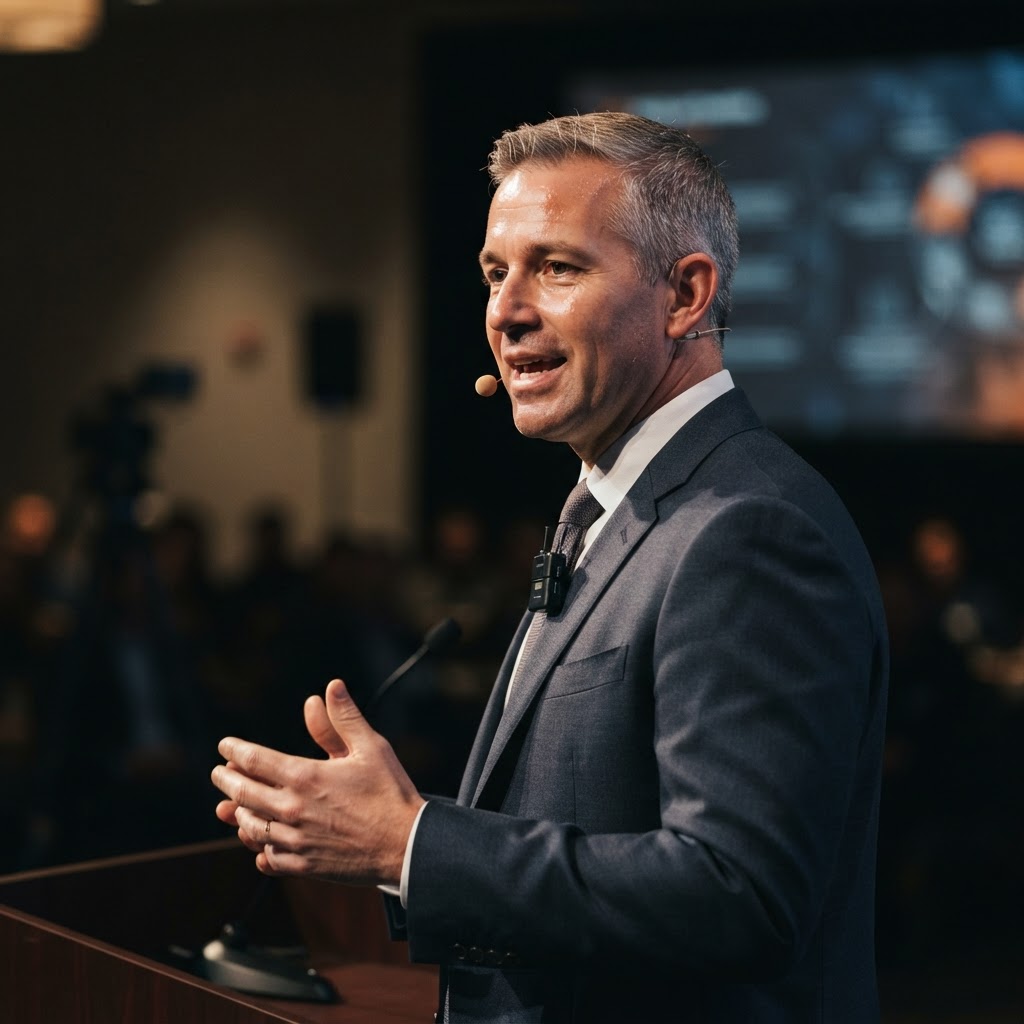
Headset mics solve a specific problem — hands-free amplification for someone who needs to move, demonstrate, or gesture without worrying about holding anything. Fitness instructors, cooking demo hosts, dance captains, and fashion show emcees all fall into this category. The capsule sits at the corner of the mouth, close enough for consistent level regardless of how much the speaker turns or bends, and a cardioid pattern keeps plosives from overloading the input. The downside is visibility: a headset reads clearly on camera and under harsh lighting, which matters for brand activations and anything photographed close-up. If the event is being filmed for a highlight reel or livestream, factor that into the decision the same way you'd think about lighting design for camera exposure.
For a typical corporate keynote with one speaker standing mostly still behind a podium, a lavalier is almost always the better call — less visible, more natural sound, no technique required. For a panel with four seated guests, lavs on each person with careful RF channel spacing avoid interference and let the audio team ride each mic independently. For an emcee or host who's moving across the stage and interacting with the crowd, a handheld gives more control over gain before feedback and doesn't fight against wardrobe noise. For any speaker whose hands need to be free for a demo, slides, or movement, the headset wins even though it's less discreet.
Fabric is the detail most planners overlook until it shows up in the mix. Silk blouses, beaded jackets, and layered scarves all generate friction noise against a lavalier capsule that no amount of EQ fixes after the fact — the fix is mic placement and sometimes a different mounting point entirely, like moving the clip to a tie or jacket seam instead of a soft collar. This is exactly why a pre-event line check with the actual speaker wearing their actual outfit matters more than a spec sheet. Audio engineers on a well-run audio production team will ask for wardrobe details during pre-production specifically to flag this before it becomes a problem on show day.
Multi-speaker corporate events — trade show main stages, all-day conferences, award ceremonies — need a mic plan that accounts for speaker count, not just mic type. Every wireless channel needs clean RF spacing, every belt pack and handheld transmitter needs a charged battery with a backup on standby, and the changeover between speakers needs to happen without a dead-air gap. This is a staffing and planning problem as much as a gear problem, and it's where a run-of-show document with mic assignments per speaker earns its keep. Teams running back-to-back corporate sessions typically build in a two-minute buffer between speakers specifically to swap mics and confirm levels before the next segment starts.
Weddings follow the same logic with different stakes. An officiant standing in one spot through the ceremony is a clean lavalier application. Toasts passed hand to hand during the reception call for a handheld, both because multiple people will use it and because a shared lav isn't practical to re-clip every two minutes. Couples planning a wedding with a live band or DJ set should also confirm whether the reception audio system has enough open channels to cover both the toast mic and any performers without re-patching mid-event — a detail worth running through the event sound calculator before finalizing the AV order so the system is sized for the actual number of inputs, not just the speaker count.