Active vs. Passive Speakers: What Changes in Your Power and Rigging Plan
Every planner eventually asks the same question when a vendor quotes a sound system: should this be active or passive? The honest answer is that it depends less on how the room sounds and more on what you're willing to manage on show day — power circuits, rigging weight, and how many points of failure you can tolerate between the mixing console and the audience's ears.
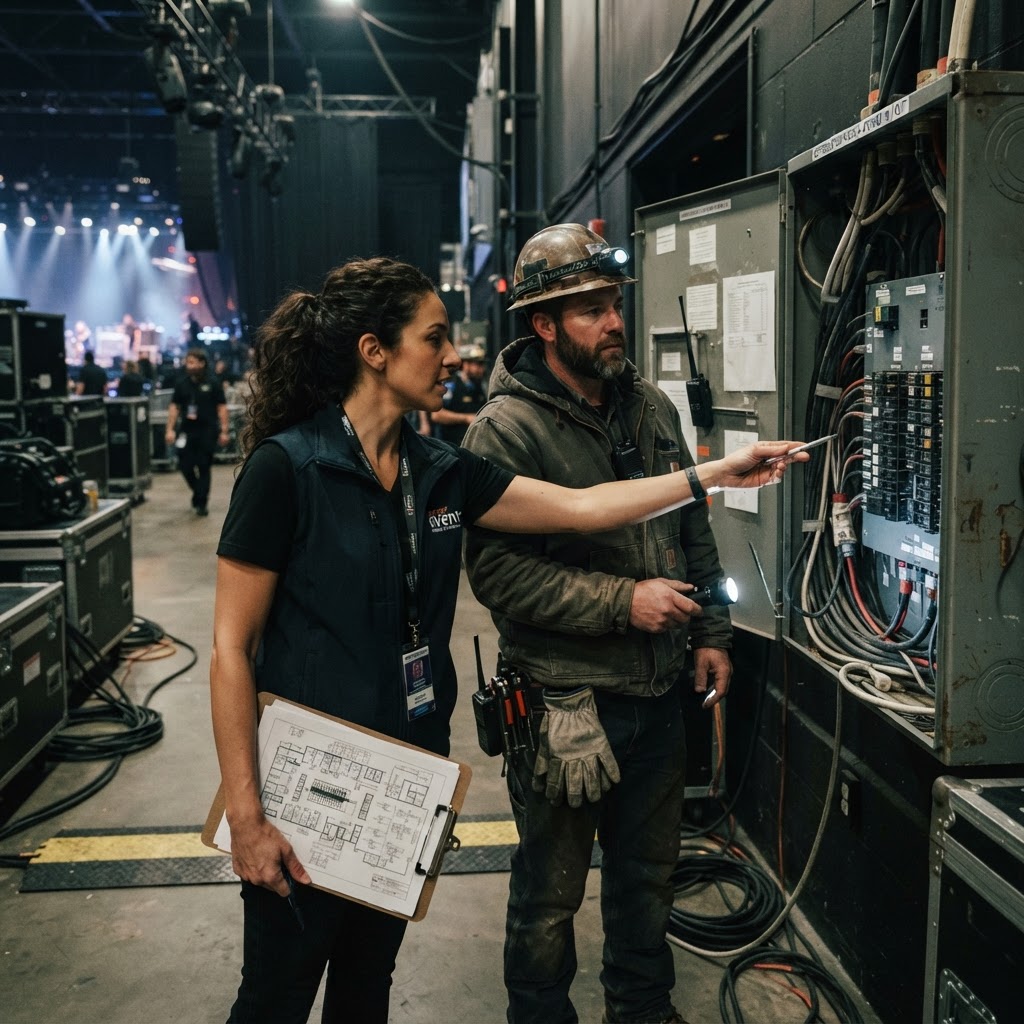
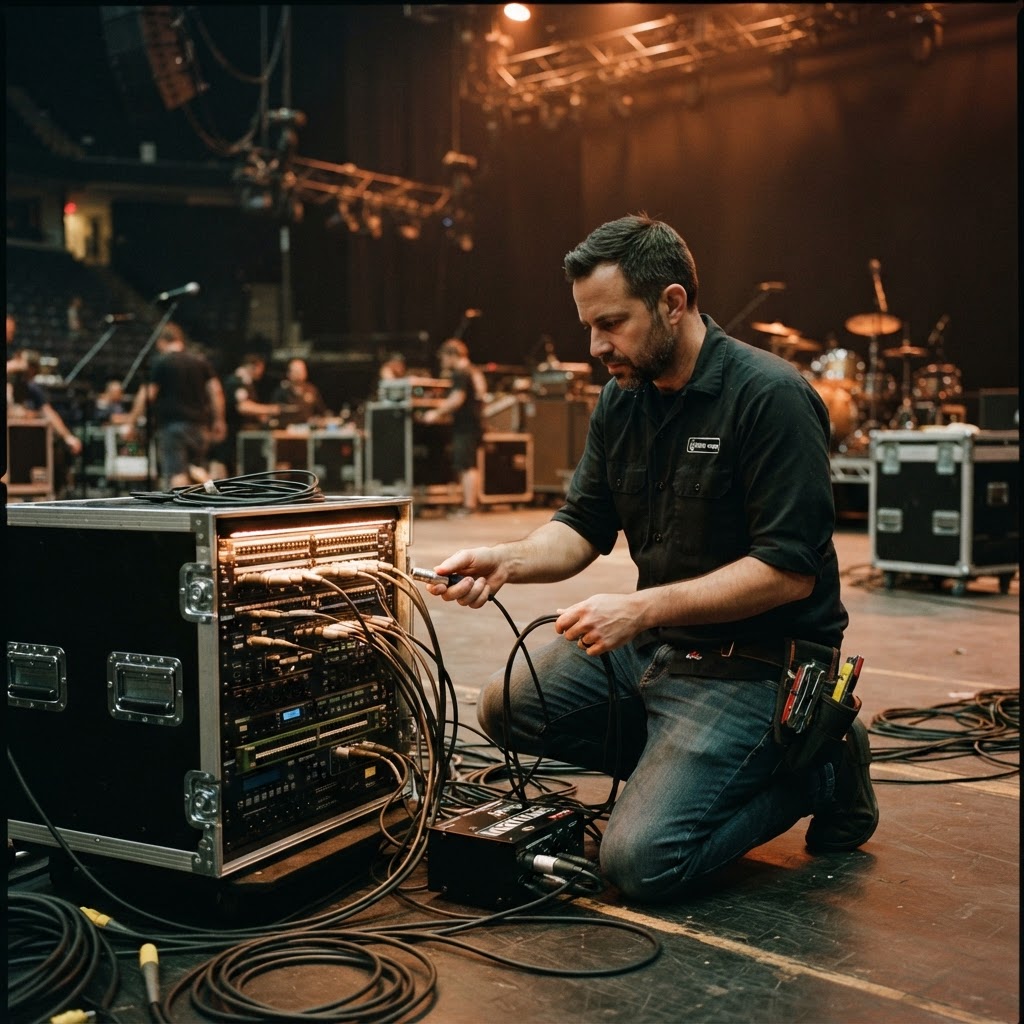
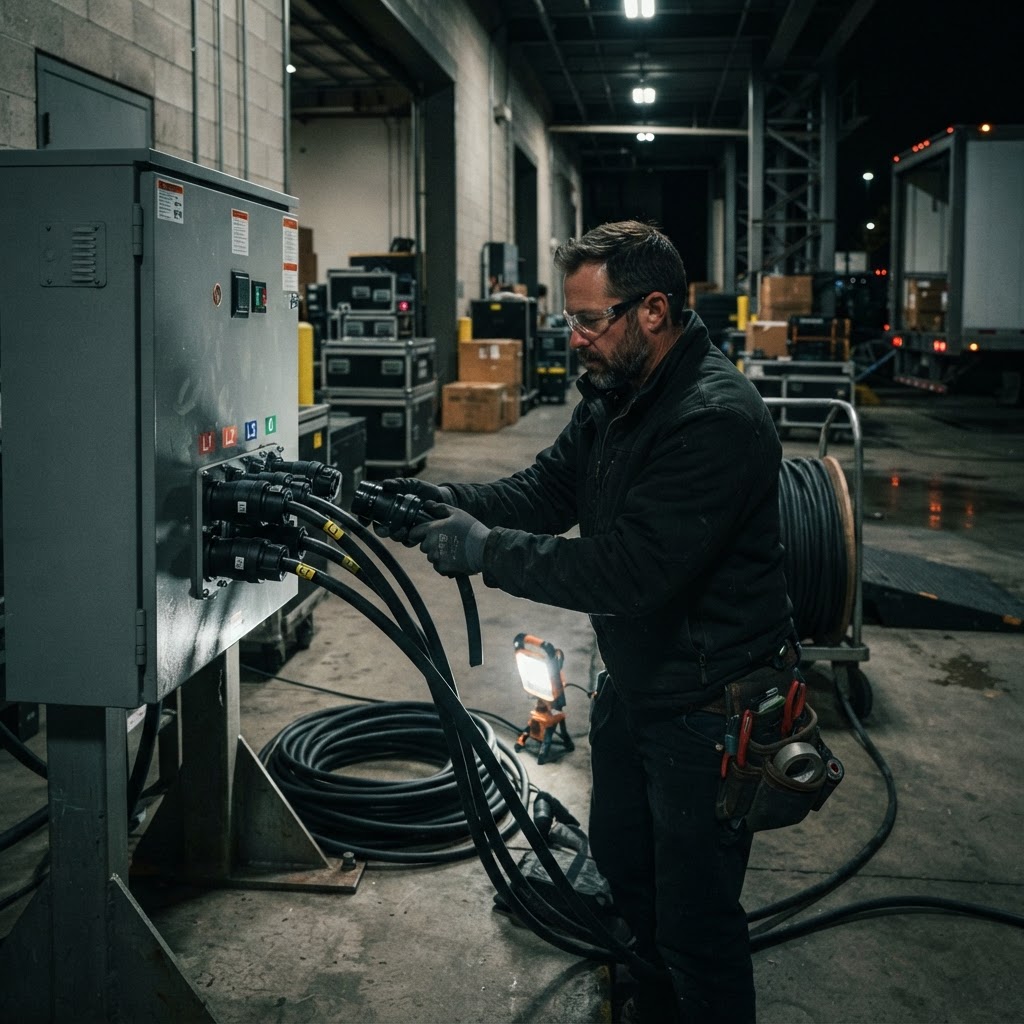
Passive speakers are just transducers. They have no amplifier or DSP inside, which means every box needs a corresponding channel on an external amp rack, run with heavy-gauge speaker cable instead of line-level XLR. That amp rack draws serious current — a rack powering four passive tops and two subs can easily pull 20-30 amps at full output — and it needs its own dedicated circuits, cooling, and a technician who knows how to gain-stage the whole chain correctly. Get the gain structure wrong between console, amp, and speaker, and you get clipping, blown drivers, or an amp running hot in a truss case with no airflow.
Active speakers put the amplifier and DSP inside the cabinet. You run line-level signal to each box, power to each box, and the processing is already tuned by the manufacturer for that specific driver and horn combination. This cuts the failure points in the signal chain roughly in half — there's no separate amp rack to mis-wire, no speaker cable runs to trip over, and no guesswork matching amp channels to box impedance. For corporate keynotes, panel sessions, and trade show booths where the AV team needs to strike and reset fast, active systems are usually the better call, and it's the default we spec for most corporate work.
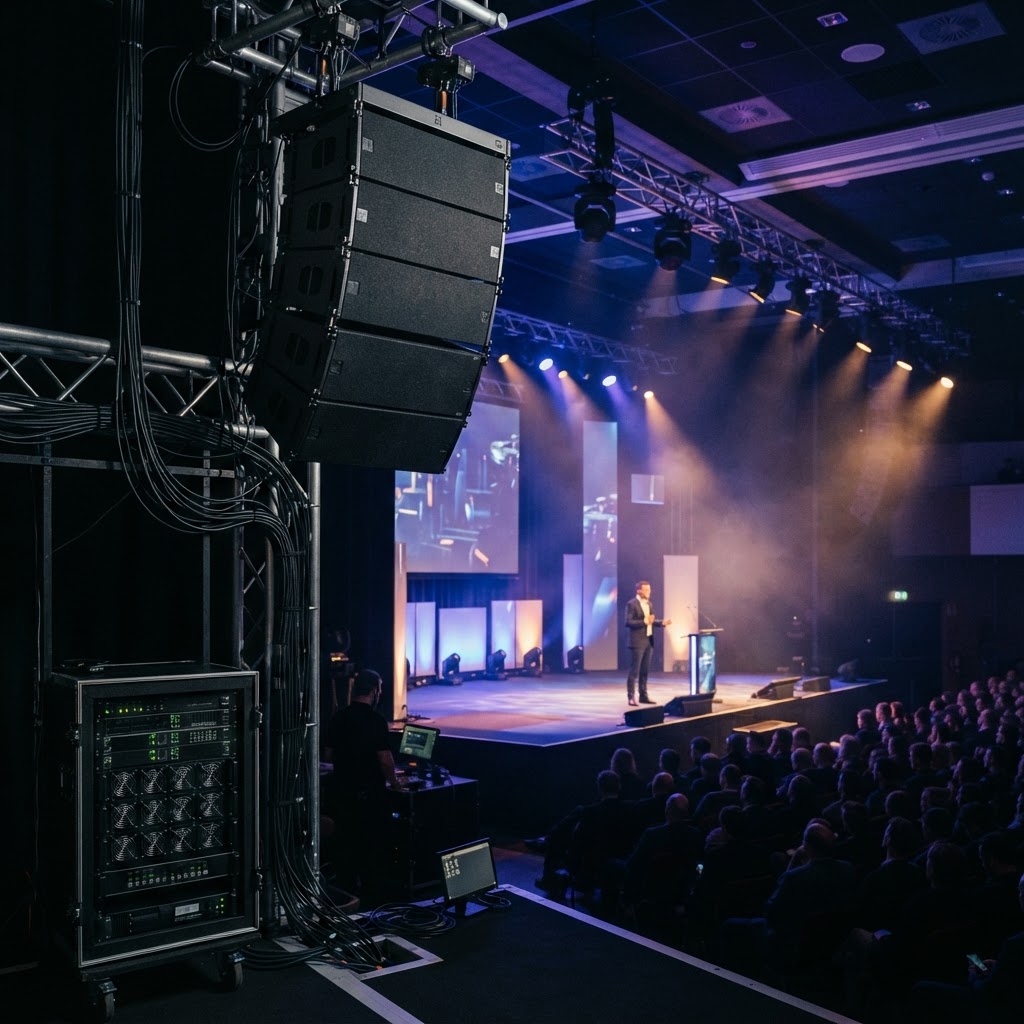
Weight is the part planners forget until the rigging plan comes back. An amp rack sitting on the ground doesn't care how heavy it is, but if you're flying line array over a stage, every pound in the enclosure matters for the rigging point rating and the motor chain selection. Passive cabinets are lighter individually since the amp lives elsewhere, which can matter on a flown hang with a tight grid or a venue with conservative point load limits. Active cabinets carry the amp weight aloft, which means your rigger needs the real numbers — not estimates — before pulling a permit or booking motors.
Redundancy is where the two approaches really diverge. With a passive system, one amp channel failing can take out two speakers if it's running a stereo pair, but swapping a spare amp channel mid-show is a five-minute fix if the tech has a spare in the truck. With active speakers, a failed amp module means pulling that specific box out of the array, because the amplifier isn't separable from the cabinet. For a one-off wedding or private event, that risk is manageable. For a multi-day concert run or a touring corporate show, we often spec a passive system precisely because field-serviceable amp racks reduce downtime risk.
Cable runs change your load-in time either way. Active systems need power and a data or line-level line to every box — often on a single cat5 or fiber run if the system supports networked audio — which is faster to deploy across a wide stage or multiple delay towers. Passive systems need heavy speaker cable from the amp rack to each cabinet, and speaker cable runs longer than 100 feet start to lose meaningful power due to resistance unless you upsize the gauge, which adds weight and cost. If your event has delay speakers positioned 150 feet from FOH, that's a real engineering decision, not a preference.
Budget conversations usually assume passive is cheaper because the boxes cost less, but that ignores the amp rack, the distro to power it, and the labor to tune it correctly. Active systems often cost more per box but less in total system complexity, especially for one-day activations where setup speed matters more than long-term serviceability. If you're not sure which config fits your room size and audience count, running the numbers through the event sound calculator before you request quotes will save a round of back-and-forth with your AV partner.
There's no universally correct answer, which is why a experienced audio production team will ask about your show format before recommending a system. A single-day brand activation with a tight teardown window points toward active. A multi-city tour or a large flown array over a mixed-genre concert bill points toward passive, field-serviceable amps, and a tech on headset who can swap a channel without stopping the show. Either way, the decision should get made during the advance call, not discovered when the gear shows up at load-in — and if you're renting rather than booking full production, checking amp specs and power requirements against your venue's actual panel capacity through equipment rental planning avoids a breaker trip during soundcheck.