Tie-In Fees, Camlock and Distro: What Hotel Power Charges Actually Pay For
A client once asked why a single-day meeting needed an $850 'electrical tie-in fee' when there were outlets all over the ballroom. The outlets weren't the issue. The load was. Running a 40-foot LED wall, four moving lights, and a line array off wall receptacles will trip breakers before the first session starts, and that's exactly the scenario a tie-in exists to prevent.
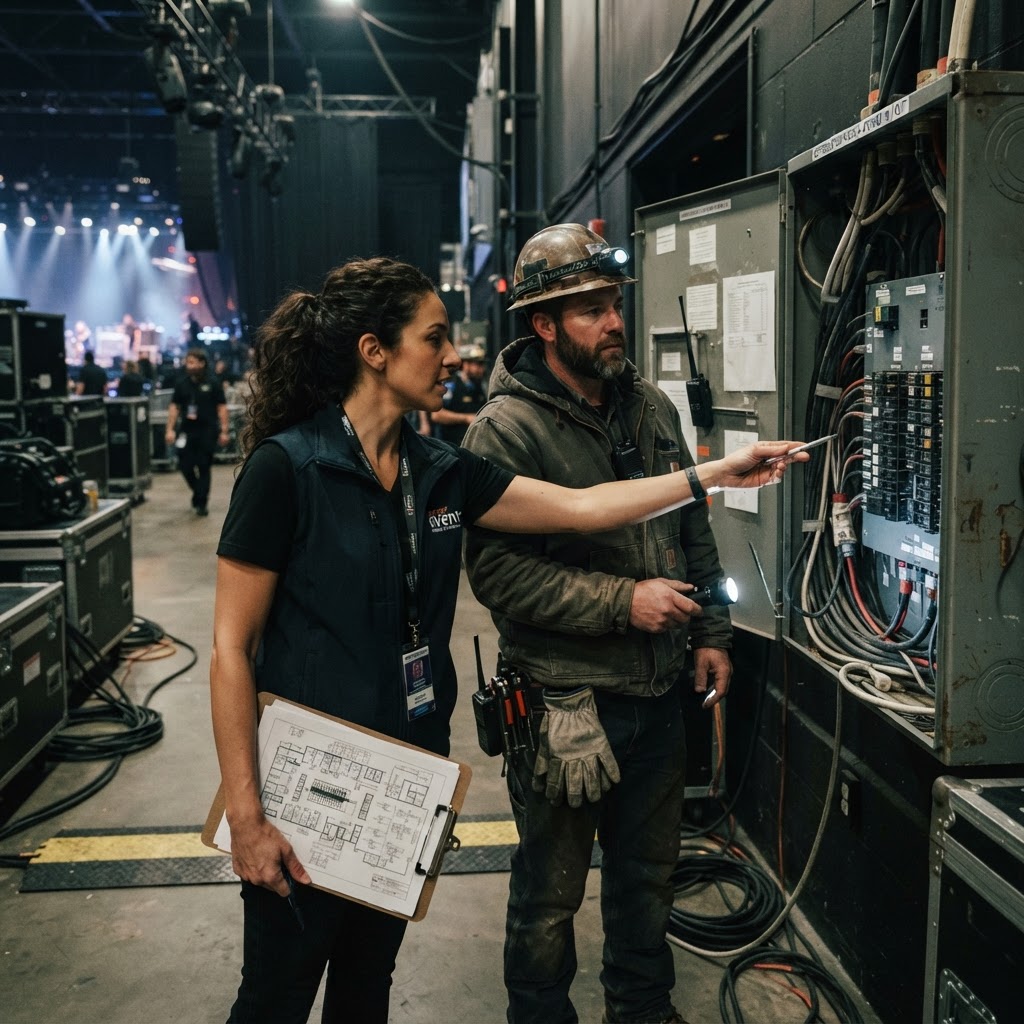
A tie-in is a direct connection from your distro to the venue's electrical system, upstream of the wall outlets, usually at a house panel, a bus duct, or a company switch in the back of house. It bypasses the standard 20-amp circuits entirely and gives your production the three-phase power it needs to run lighting, audio, and video simultaneously without browning out. Most hotels require their own licensed electrician to make that connection, not your AV vendor, and that's where the fee comes from.
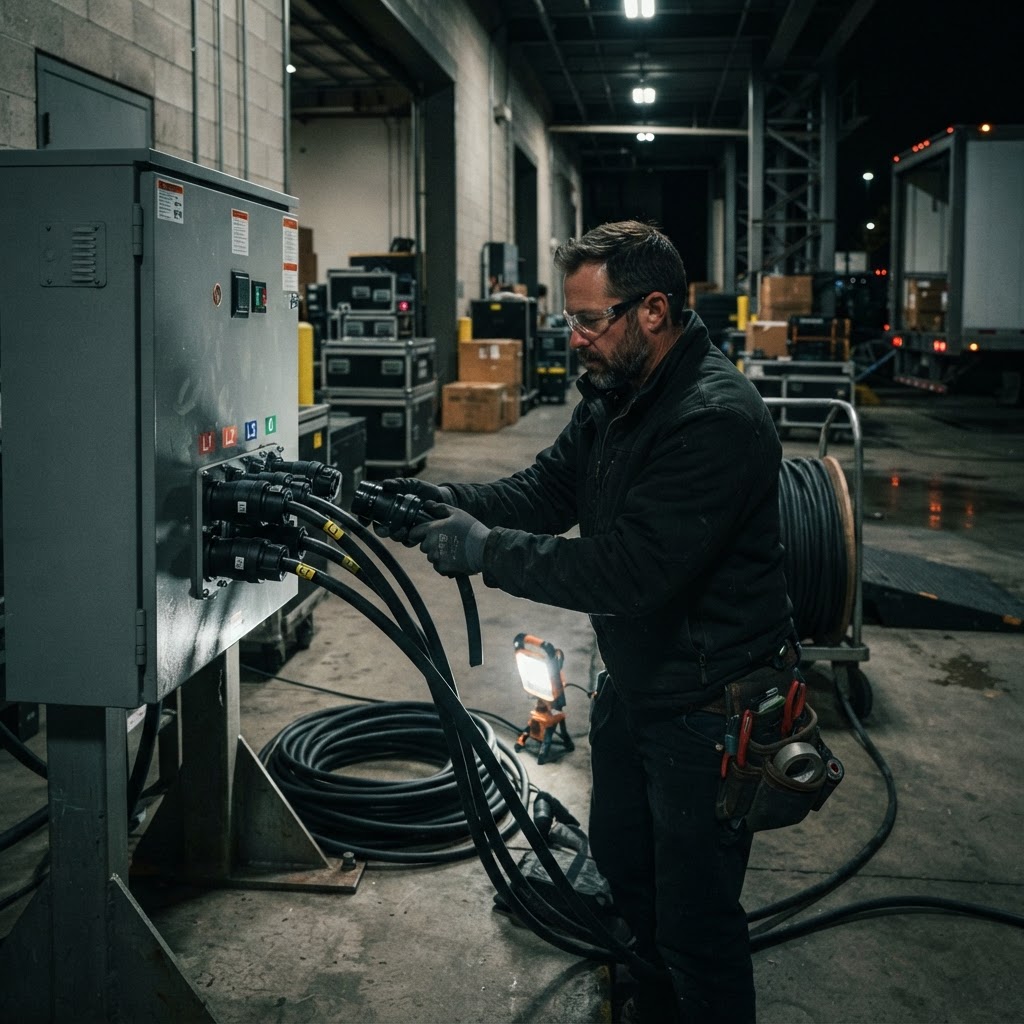
Camlock — sometimes called cam, or by the brand name Veam — is the heavy-gauge cable and connector system that carries that power from the tie-in point to your distro. Each camlock conductor (black, red, blue for phases, white for neutral, green for ground) is rated to carry serious amperage, often 400 amps per set, far beyond what a standard stage pin or Edison cable can handle. If your production needs 200 amps of three-phase power for a full event production build, camlock is how it gets from the wall to your gear without melting insulation or starting a fire.
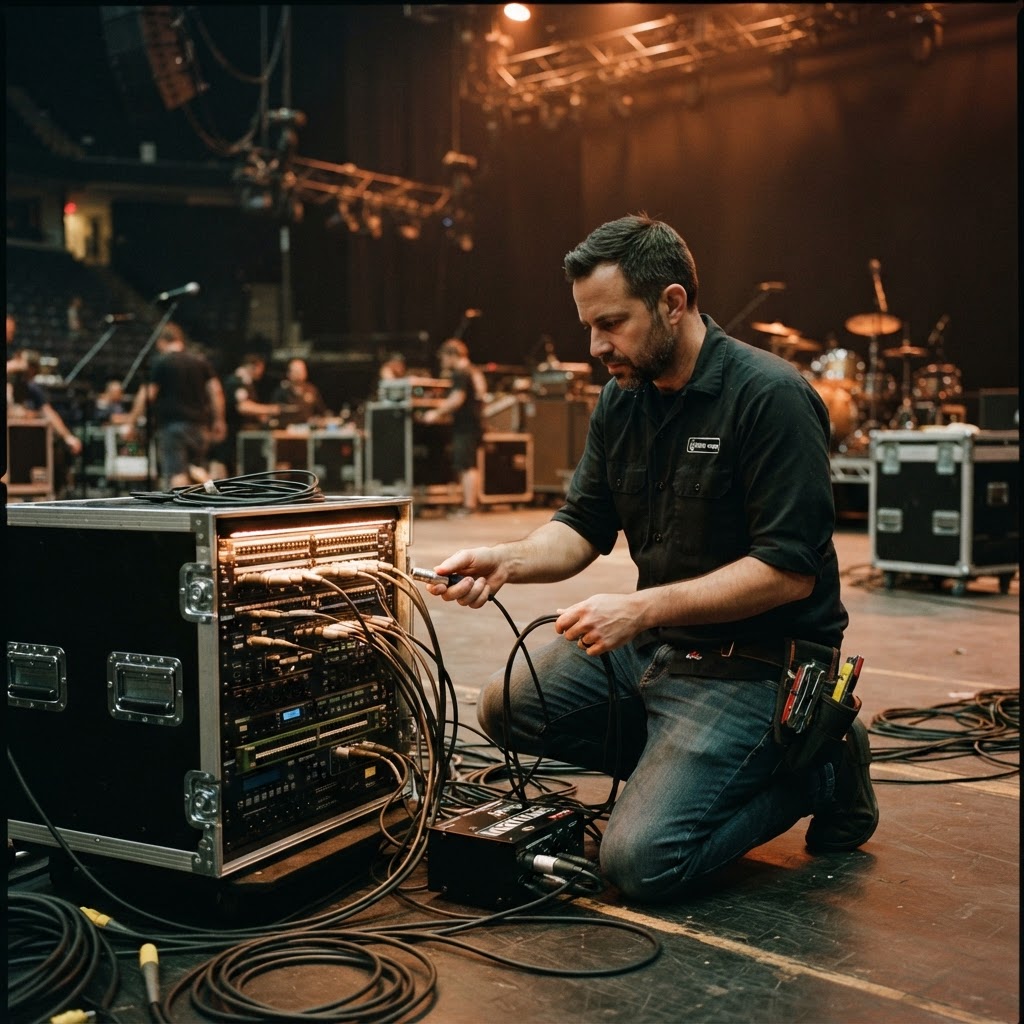
Distro — short for power distribution — is the box that takes that raw camlock feed and breaks it down into usable circuits. A good distro unit splits three-phase power into balanced single-phase legs, fuses or breakers each output, and lets your electrician hand off clean, labeled circuits to audio, lighting, and video separately. This matters because a line array pulling heavy current on the same leg as a dimmer rack will introduce hum and flicker. Proper distro planning is part of why lighting design and audio production teams coordinate power needs before load-in, not during it.
So what does the tie-in fee actually cover? It's not profit padding. It covers the hotel's electrician — often a union rate billed in four-hour minimums — plus liability insurance for someone physically opening a live panel in their building, plus the engineering sign-off that confirms the panel can handle the draw without affecting other events or guest rooms on the same riser. Hotels also factor in after-hours and overtime rates, since most tie-ins happen before 7 AM or after midnight to avoid disrupting other functions on the property.
Fees vary widely by market and property. Expect anywhere from $400 for a small single-phase tie-in at a limited-service property to $2,500 or more for a large three-phase service at a convention hotel with union labor requirements. Some venues charge per circuit, others charge a flat day rate regardless of load, and a few bundle it into a broader 'electrical services' line that also includes standby electrician time during the event — which you'll want if you're running anything on an LED video wall that can't afford a power interruption mid-show.
The mistake planners make is treating this as a negotiable junk fee and trying to cut it from the budget. You can't skip a tie-in if your load exceeds what wall outlets support, and guessing wrong means a blown breaker during a keynote or a runway show. The smarter move is confirming your actual power draw early — our event sound calculator and LED wall calculator are useful first passes for sizing audio and video loads — and then getting the venue's exact tie-in and distro requirements in writing during the site visit, not the week of the event.
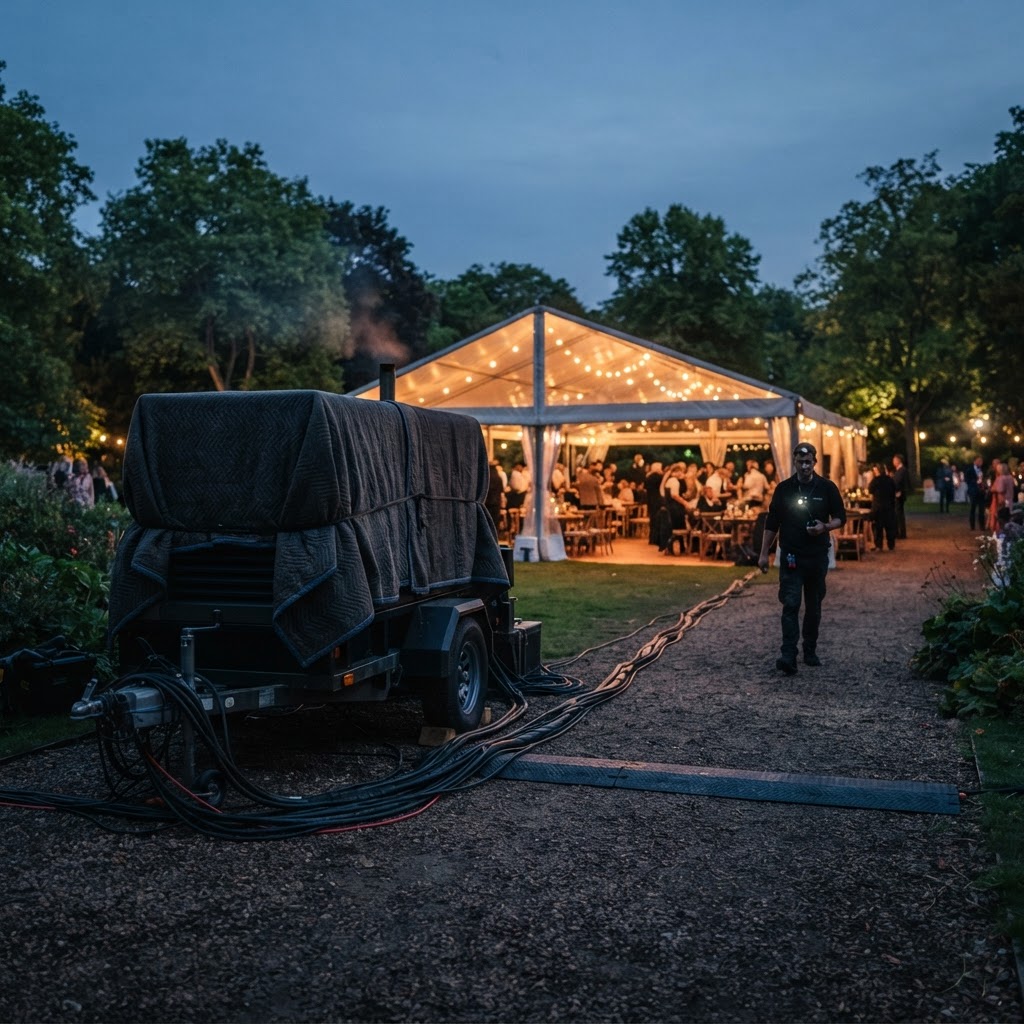
Where this gets expensive fast is when nobody checks the venue's electrical capacity before signing the contract, especially for larger builds like corporate general sessions or fashion runway shows with heavy lighting rigs. A property with an old 100-amp company switch simply cannot support a modern LED and lighting package, no matter how big the tie-in fee is. In those cases the real cost isn't the fee — it's bringing in a generator or renting supplemental distro to make up the shortfall, which should be scoped during advance, not discovered on show day.