How Long Does AV Load-In Actually Take? A Planner's Timeline Guide
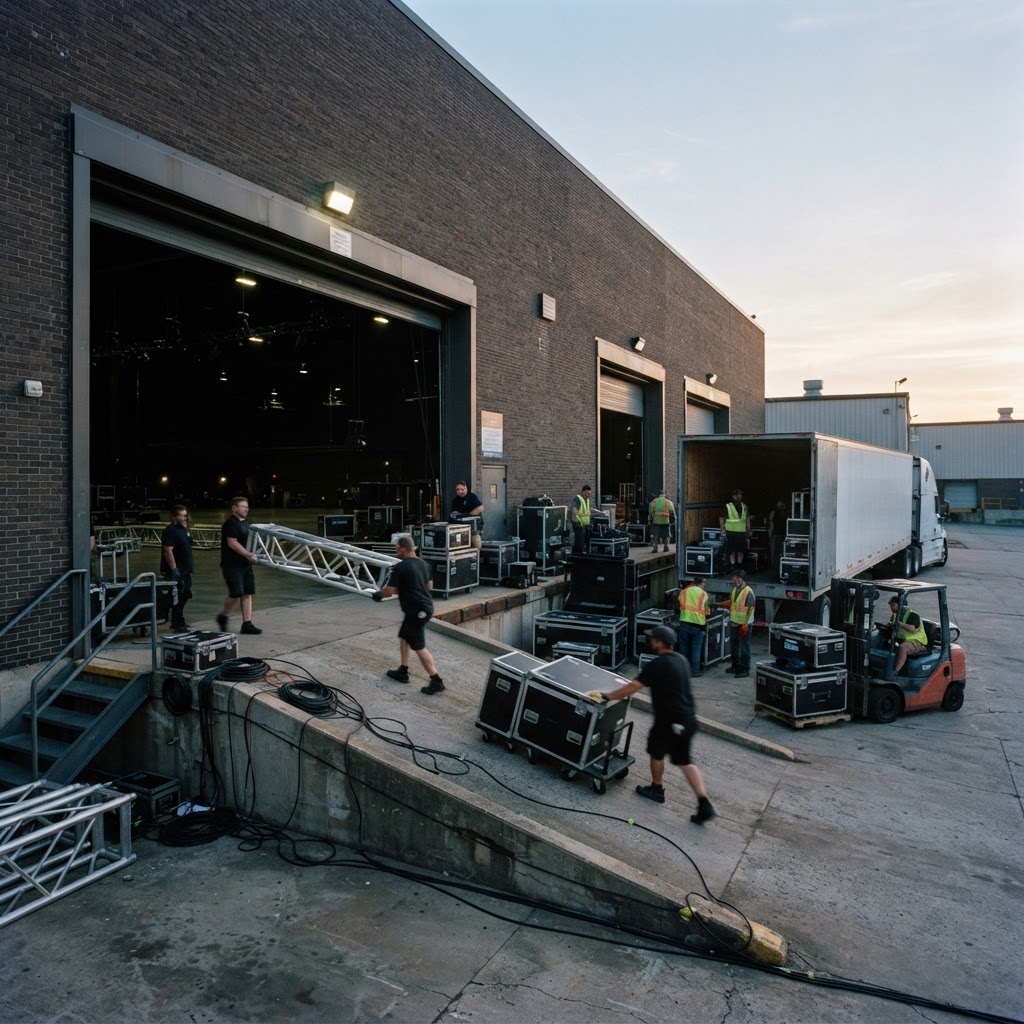
A planner tells us doors open at 6 PM and the truck can be at the dock by 10 AM. That eight-hour window sounds generous until you break down what actually has to happen inside it: unload, rig, build, test, program, and rehearse. Load-in time isn't guesswork. It's math based on venue access, gear complexity, and crew size, and getting it wrong is how shows end up doing sound check with guests already in the lobby.
Venue access is the first variable, and it's the one planners overlook most. A loading dock with a level entrance and a wide freight elevator can move gear into a ballroom in under an hour. A venue with stairs, a narrow service corridor, or a freight elevator that fits one case at a time can add two to three hours before a single truss point goes up. Always confirm dock dimensions, elevator size, and distance from dock to room before you lock a load-in call time.
Rigging adds its own clock. If the venue has certified rigging points, a crew can hang truss and motors relatively fast once the point-by-point plan is approved. If there are no house points, the crew needs ground support or genie lifts, which take longer to build and require more floor space and clearance checks. Any load-in involving flown elements should have the rigging plan finalized during the site survey, not negotiated the morning of the show.
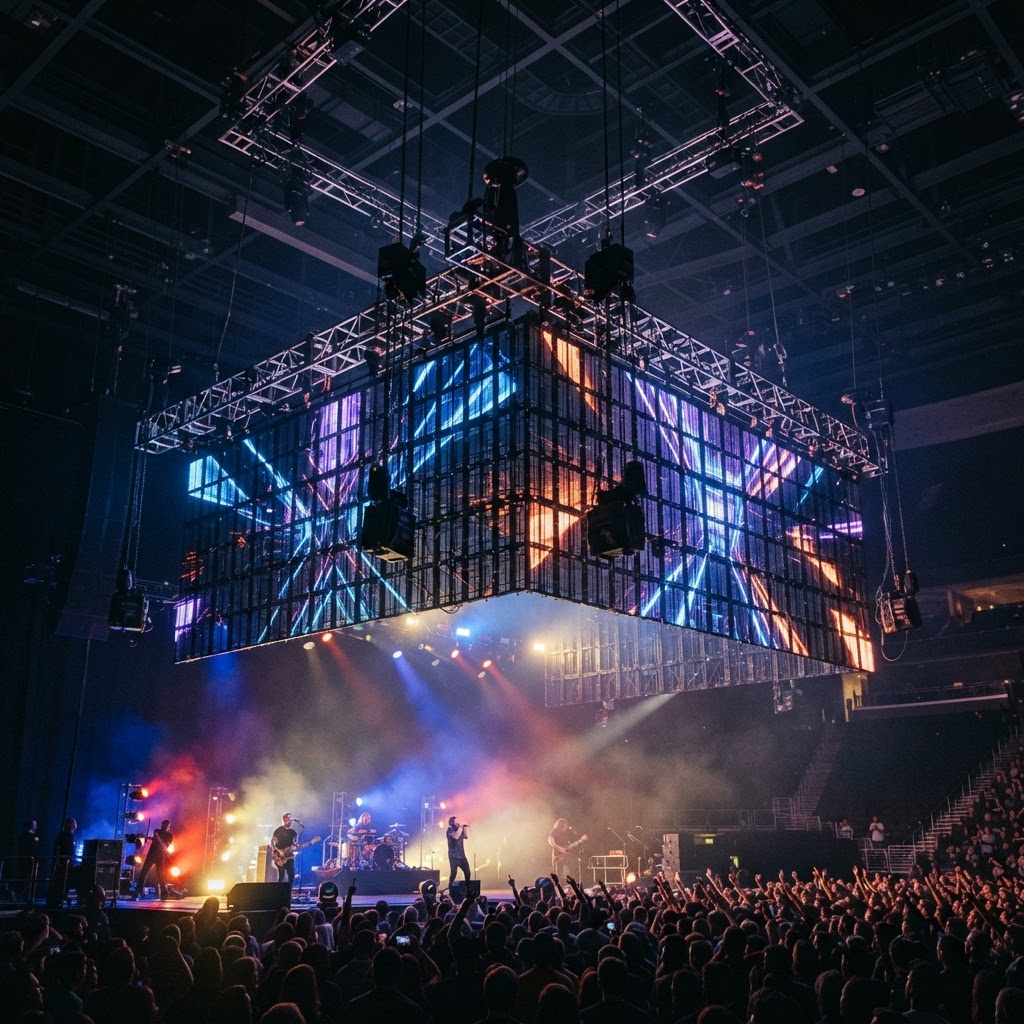
LED wall build time scales with size and configuration, not just screen count. A single flat wall under 20 feet wide can go up in a couple of hours. A curved or multi-panel wall, or one built at a tighter pixel pitch for close-viewing distances, takes longer to align and calibrate. Running your specs through the LED wall calculator before load-in gives your crew an accurate panel count and rigging weight, which keeps the build schedule realistic instead of aspirational. For anything beyond a single flown wall, loop in the LED video wall team on timing during pre-production, not the week of the event.
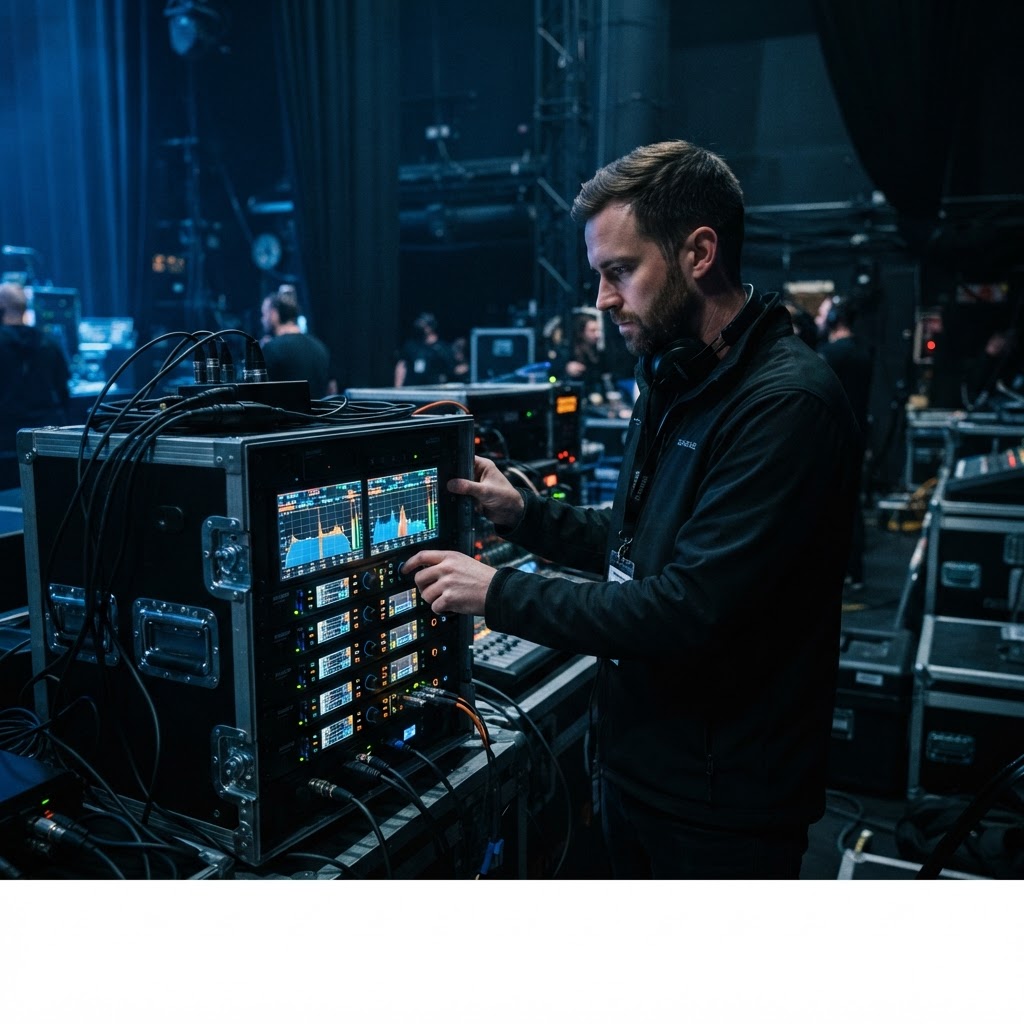
Audio setup time depends heavily on system type. Ground-stacked point-source speakers on tripods can be positioned and tuned quickly. Flown line arrays take longer because each hang has to be measured, rigged, and tuned to the room, then checked against delay speakers for coverage. Complex audio production setups with multiple zones, monitor mixes, and wireless mic coordination need a dedicated tuning window before any rehearsal starts — build that into the schedule as its own line item, not a buffer inside another task.
Power is the part that gets rushed and shouldn't be. Distro panels have to be placed, cable runs measured and taped down, and every circuit tested under load before gear goes live. If the venue is on house power, someone needs to confirm panel capacity and breaker locations in advance. If you're running a generator for an outdoor activation, add time for fuel, quiet-running placement, and a full power-up test before any programming begins. Skipping the power test to save twenty minutes is how a show loses a video wall mid-event.
Crew size changes everything about your timeline. A four-person crew building a mid-size stage, wall, and PA system will take considerably longer than an eight-person crew doing the same build. Union venues often have minimum call times, mandated meal breaks, and overtime rules that affect both cost and schedule — a load-in that runs past a meal break penalty isn't just expensive, it eats into your rehearsal window. Confirm crew size and labor rules with the venue and your production team well before load-in day, not during it.
The way experienced production teams build a schedule is backward from doors open. Start with the time guests arrive, subtract rehearsal and sound check, subtract programming and cue-to-cue for lighting and video, subtract system tuning, subtract build time for rigging and staging, and what's left is your actual load-in window. If that number comes out negative, something has to move — an earlier dock time, a dark day the night before, or a trimmed system. This is the conversation to have during event production planning, not during a stressful morning-of scramble.
Corporate events with tight turnaround windows — a general session that has to be struck and reset for an evening reception in the same room — are where load-in math matters most. Renting extra power distro, a second truck, or additional crew through equipment rental can compress a build that would otherwise blow past your window. The goal isn't to rush the crew. It's to give them an honest schedule so the system is tested and tuned before the room fills, instead of while it does.