How Much Power Does Your Event Actually Need? A Planner's Guide to Venue Circuits
A tripped breaker at 7:45pm during a keynote isn't a gear problem. It's a math problem someone skipped in the planning phase. Venue circuits have hard limits, and most planners find out what those limits are the hard way — when a follow spot, a subwoofer, and a coffee warmer all fight for the same 20-amp circuit.
Start with the basic formula: watts equal volts times amps. A standard US venue circuit runs 120 volts at 20 amps, which caps out at 2,400 watts — but you should only plan to use about 80% of that, or 1,920 watts, to leave headroom and avoid nuisance trips. Once you know that ceiling, you can start adding up what's actually going to be plugged in.
Lighting is usually the biggest and most predictable draw. A rig full of conventional fixtures can pull 575 to 1,200 watts per unit, while LED moving lights typically run 200 to 400 watts each. If your event calls for a serious lighting design package with wash, spot, and effects fixtures, you're likely looking at multiple dedicated circuits just for the rig — separate from house lighting, separate from catering, separate from anything the venue considers plugged into the wall by someone else.
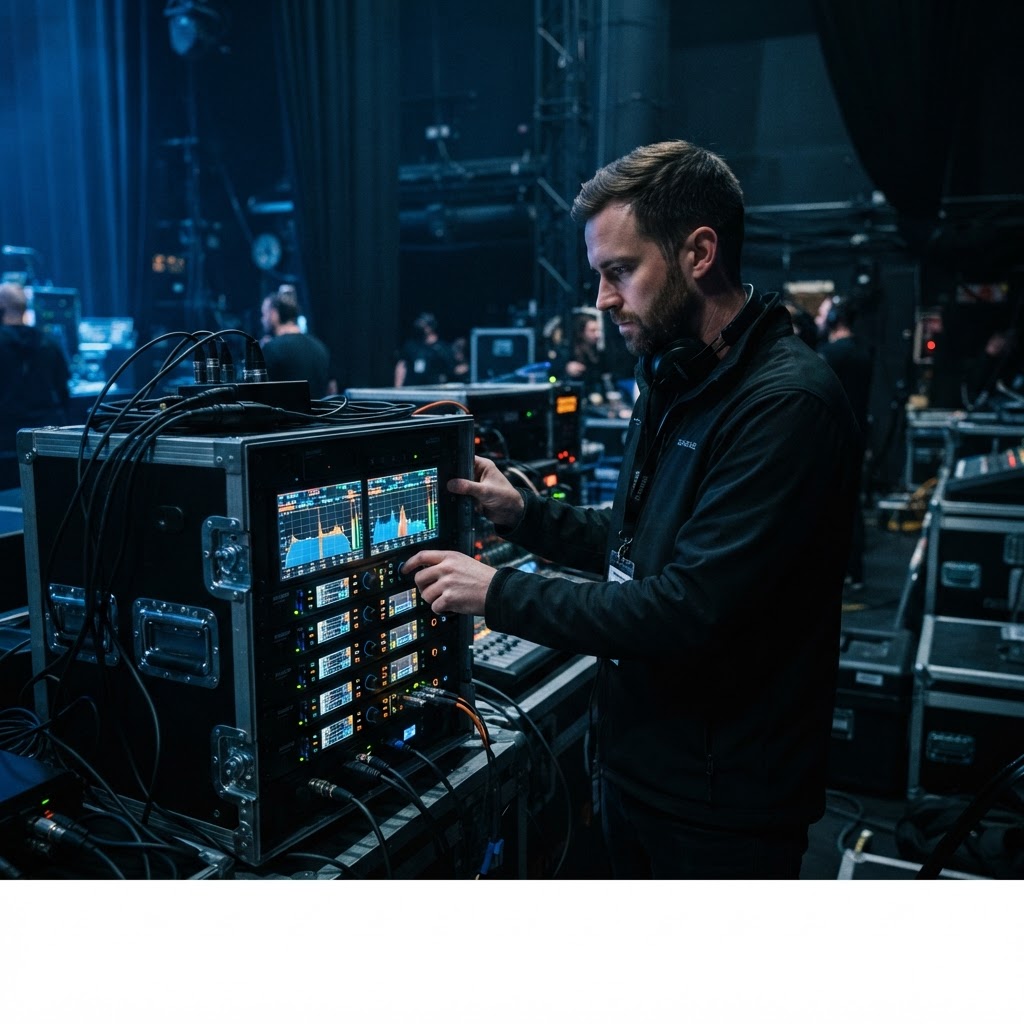
Audio draws less continuously than lighting but spikes hard. Powered speakers and subs can pull 800 to 1,500 watts at peak output, even if their average draw looks modest on paper. This is why an audio production plan for anything beyond a small conference room should include a dedicated amp rack circuit, not a shared drop with the projector cart. If you're unsure what your sound system actually requires, running the numbers through the event sound calculator before you finalize the venue contract will save you a call to a rental house at 6am on event day.
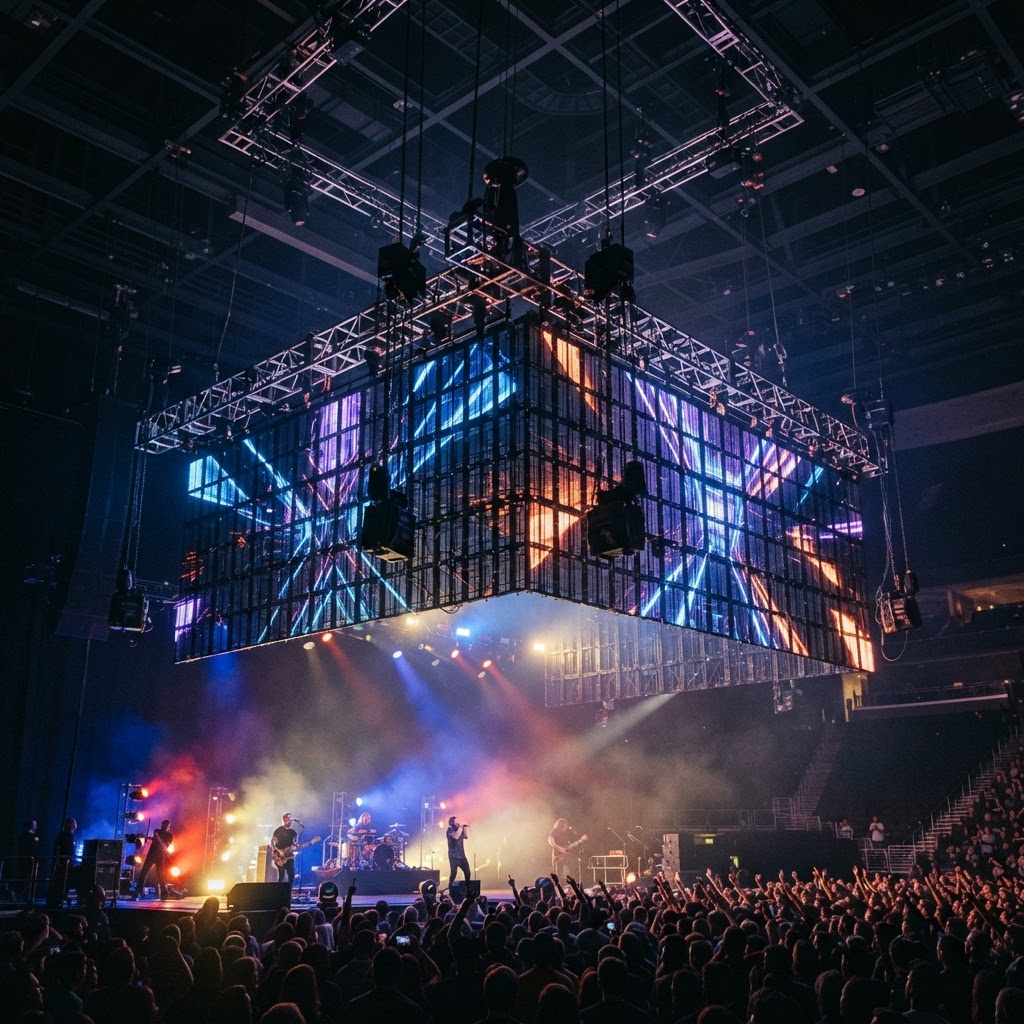
LED video walls are the wildcard most planners underestimate. A single panel can draw anywhere from 300 to 600 watts at full white, and a wall built from dozens of panels adds up fast — a modest 10x6 foot wall can require 3,000 to 6,000 watts depending on pixel density and content brightness. That load almost never fits on one circuit, which means your LED video wall vendor needs to know your venue's panel layout and circuit locations before load-in, not during it. The LED wall calculator is a fast way to get a real wattage estimate based on your wall size and pixel pitch before you start negotiating power with the venue.
Venues rarely hand you a clean electrical map. Ask for the panel schedule — the document that shows which circuits exist, where they terminate, and what's already on them. Hotel ballrooms in particular love to run house lighting, HVAC, and floor pockets off circuits that look available on a walkthrough but are already carrying load you can't see. A five-minute conversation with the venue's chief engineer, done two weeks out instead of two hours out, prevents almost every power surprise that shows up in post-event debriefs.
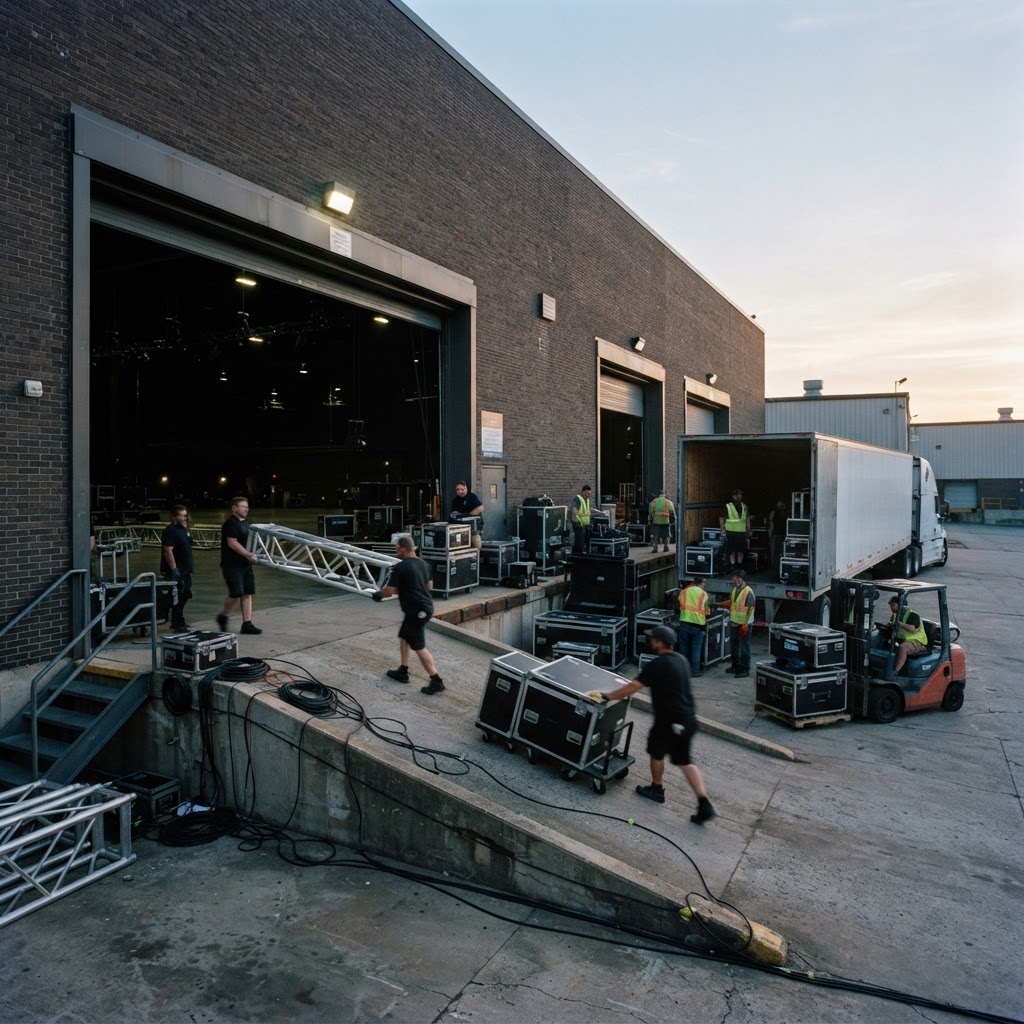
When a venue's existing circuits can't cover the load, the answer is a generator or a company switch tie-in, not fewer fixtures. A quiet tow-behind generator sized for 20 to 50kW handles most mid-size outdoor activations and tented events, but it needs its own fuel plan, noise buffer from guest areas, and distribution path back to the stage. This decision belongs early in the event production timeline, since generator rental, delivery, and permitting all take longer to arrange than most planners expect, especially in cities that require a fire marshal sign-off on temporary power.
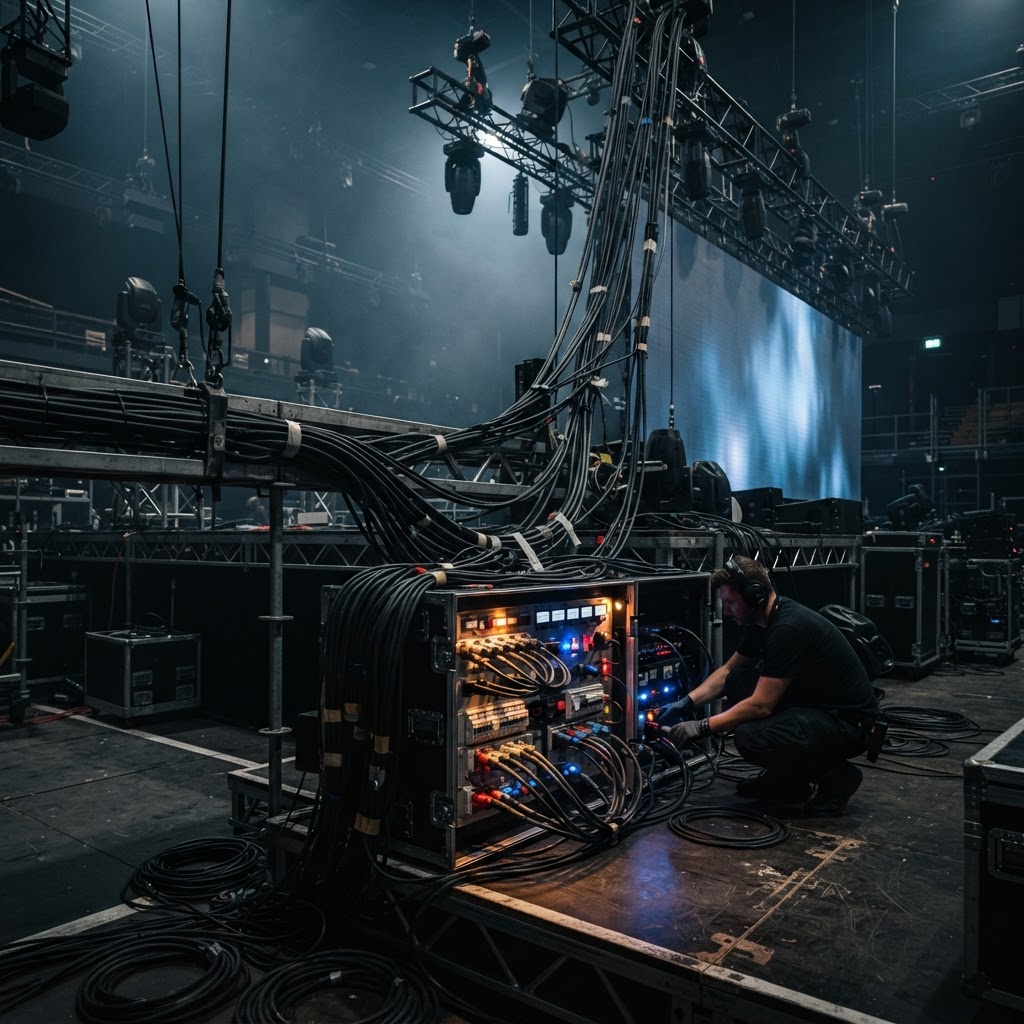
Cable and distro gauge matter as much as the circuit count. Running a 1,500-watt draw through undersized cable causes voltage drop, which shows up as dimming lights or audio that sags under load — not a breaker trip, just quietly degraded performance nobody can diagnose in the moment. Rental-grade distro boxes, feeder cable, and stage pin connectors exist specifically to move higher loads safely over longer runs, which is one more reason it's worth pulling gear through equipment rental channels that spec their cable for the actual draw instead of whatever was left in the truck.
The planners who never deal with a mid-event power failure are the ones who treat electrical capacity as a line item in the site walkthrough, not an afterthought during load-in. Get the panel schedule, calculate your actual wattage across lighting, audio, and video, and confirm circuit locations relative to where gear will actually sit — not where it looked convenient on the floor plan. Power is the one thing in event production that has zero flexibility once doors open, so it's worth getting exactly right before that happens.