The Coffee Urn That Killed the Keynote: Hidden Shared Circuits in Hotel Ballrooms
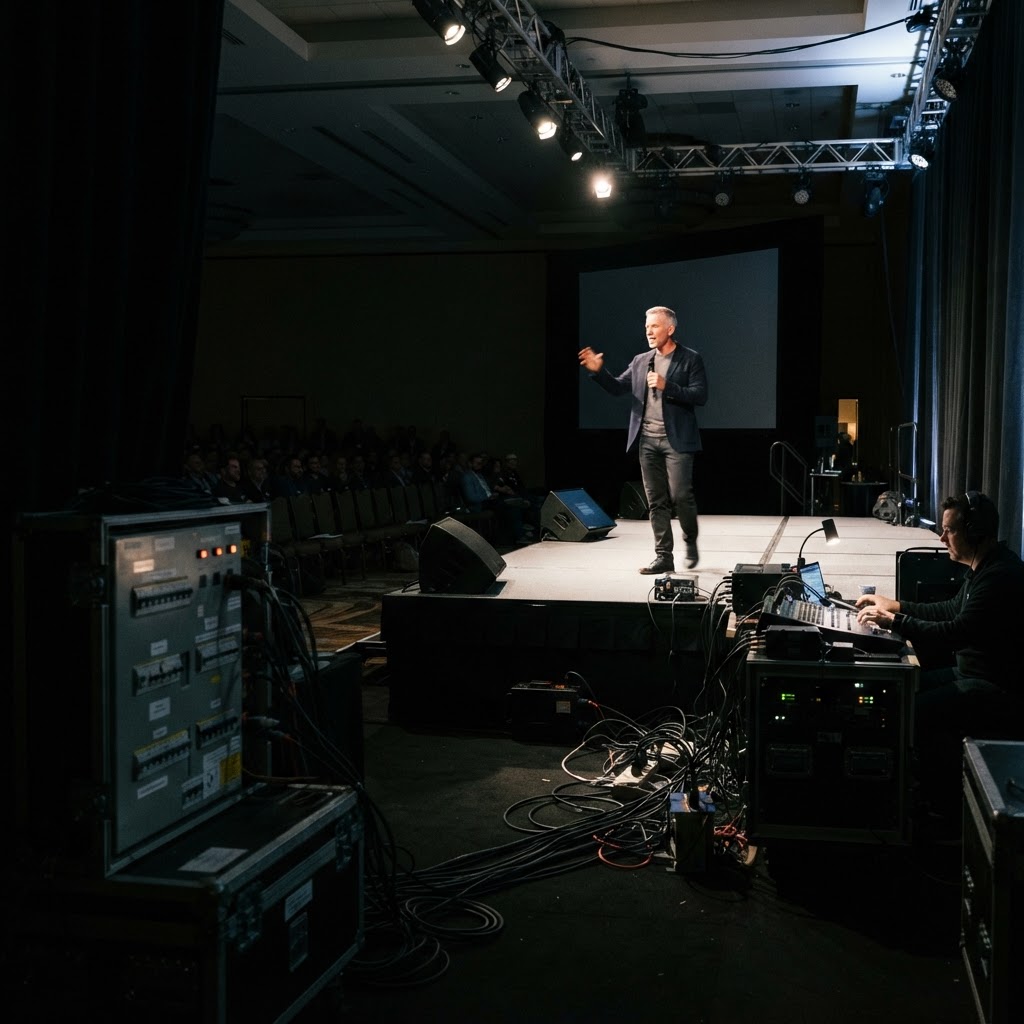
The CEO is thirty seconds into the big announcement when her wireless mic cuts out. The confidence monitor goes black. Somewhere behind the pipe and drape, a breaker just tripped, and the reason is almost never a bad amplifier or a dead battery. It's a banquet captain who needed to keep the coffee hot for the afternoon break and plugged a second urn into the nearest outlet, which happened to share a circuit with the audio rack fifteen feet away.
Hotel ballrooms are built for banquets, not production. The electrical infrastructure was designed around chafing dishes, coffee stations, and rolling bars, not line arrays, wireless receivers, and a video switcher. Outlets that look independent on the wall often trace back to the same 20-amp circuit, sometimes the same breaker that feeds the pantry two rooms away. Venue staff rarely know this because nobody's had to trace it before your event forced the question.
The math is unforgiving. A standard 20-amp, 120-volt circuit gives you roughly 2,400 watts before it trips, and most venues run them closer to 80% continuous load for safety, so call it 1,900 usable watts. A single coffee urn can pull 1,500 to 1,800 watts on its own. Add a chafing dish warmer or a second urn for the afternoon refresh, and there's nothing left for the mixer, wireless mic receivers, and confidence monitors sharing that same leg. You don't always get a hard trip — sometimes it's a brownout that causes RF dropouts, hum, or a flickering display, which is worse because it's harder to diagnose live.
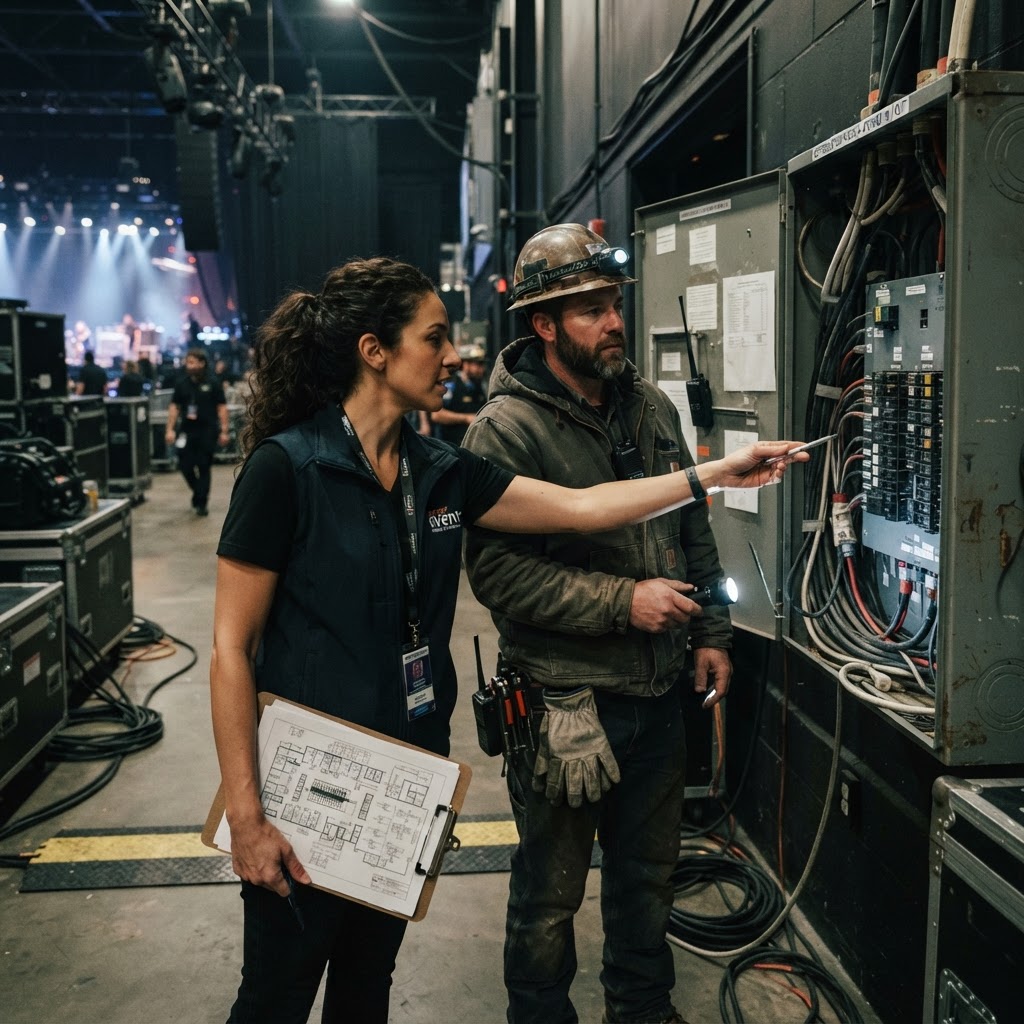
The fix starts before load-in, not during it. A proper site visit should include walking the ballroom with the venue's engineer and physically tracing circuits back to the panel, not just reading outlet labels that may be years out of date. Any planner running a keynote or general session should request dedicated circuits for AV, separate from catering and separate from house lighting dimmers, and get that in writing on the venue order. This is standard practice on any event production job where the run of show can't afford a mid-session outage.
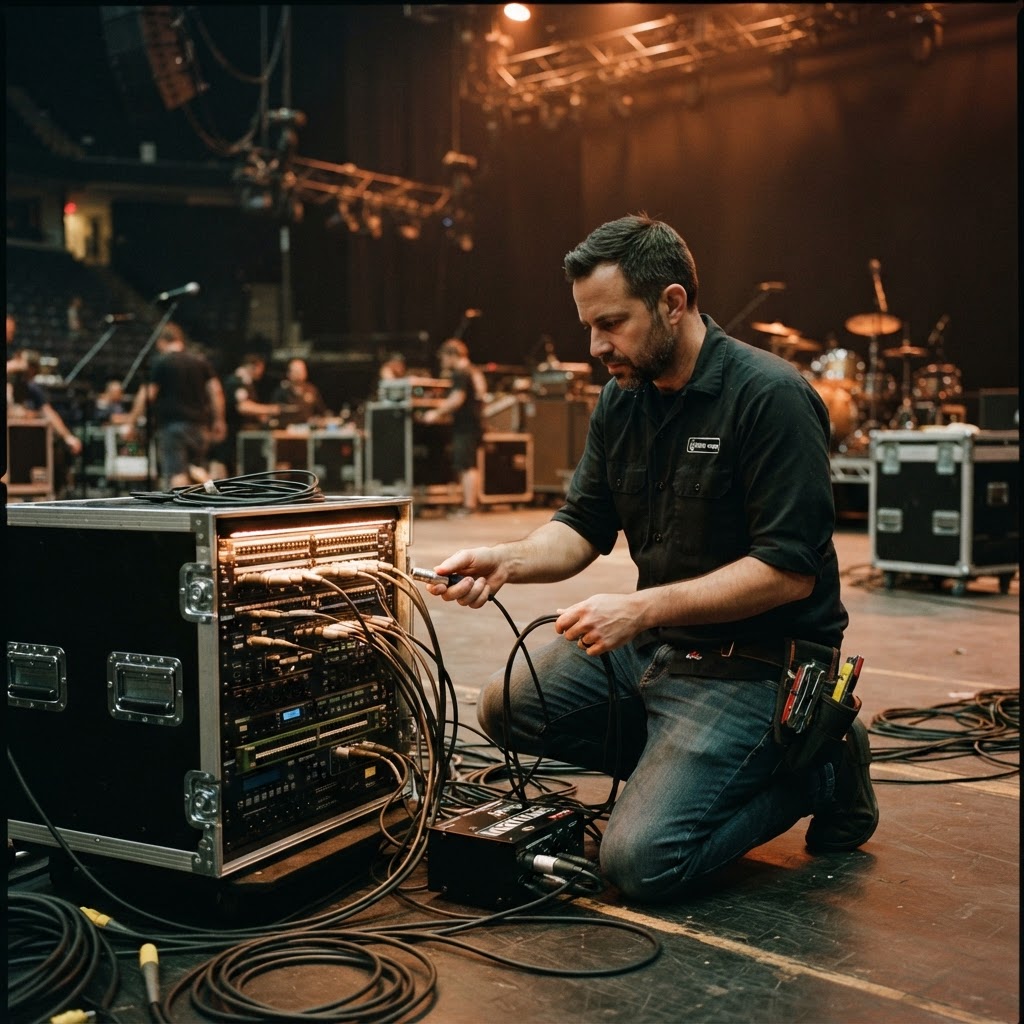
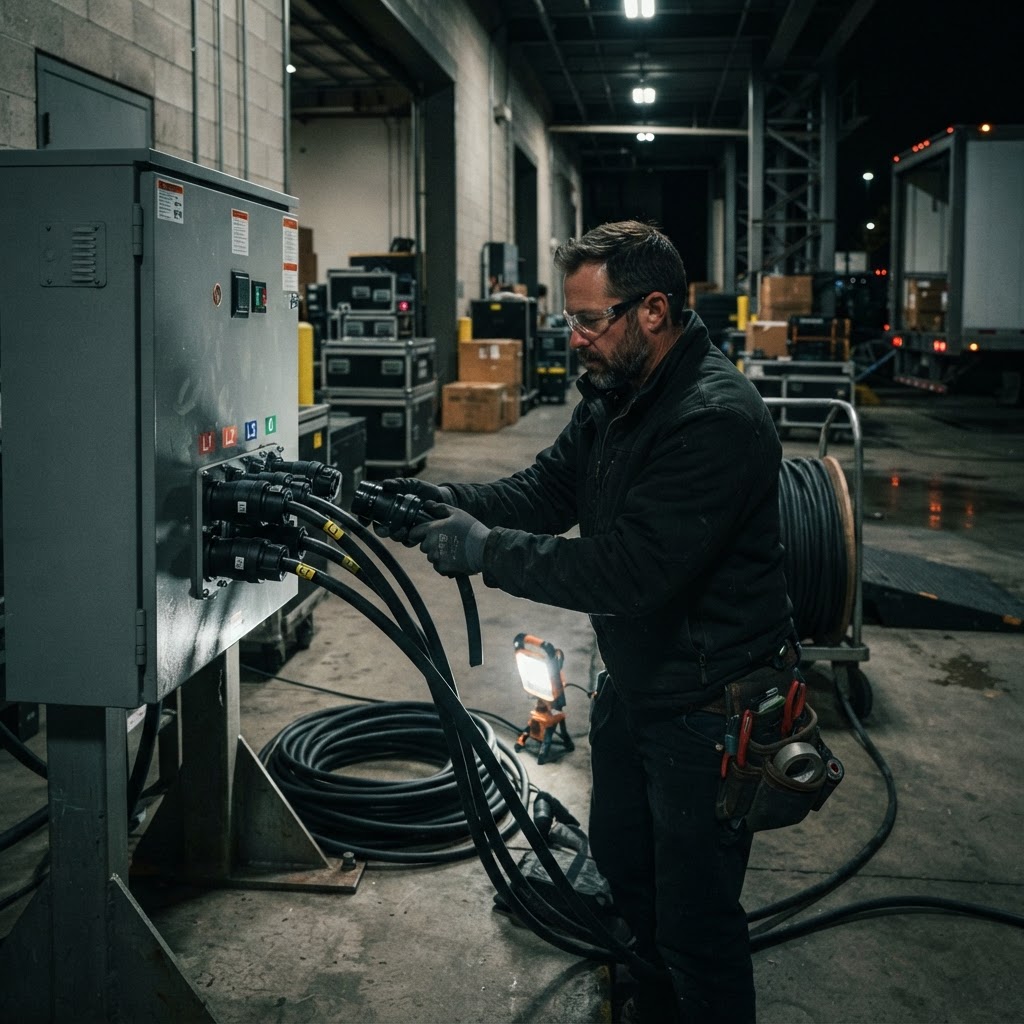
Don't rely on house power alone for anything mission-critical. Bringing in your own distribution — a spider box or stage box fed by a dedicated run from the main panel — gives you a controlled, known load instead of a guess. It also means your audio production team can put wireless mic receivers, in-ear packs, and the mixer on a clean, isolated circuit that catering staff have no physical access to. Renting the right distro gear for the venue size is worth the line item; it's covered in most equipment rental packages built for hotel ballrooms specifically because this problem is so common.
A small uninterruptible power supply on the critical audio path buys you the few seconds that matter. If a circuit does trip, a UPS on the mixer and wireless receivers means the system fades or holds instead of going instantly dead, giving your AV tech time to swap circuits or reset a breaker while the speaker keeps talking. It's a cheap insurance policy against the exact scenario that turns a keynote into a story people tell for years, and not the good kind.
Lighting rigs sit on the same shared-circuit risk. Dimmer packs and moving lights pull inconsistent current, and if they're on a leg with kitchen equipment, you'll see flicker or color shift exactly when a camera or livestream feed is capturing the stage. Coordinating lighting design power needs alongside audio and video in the same site walk avoids surprises, since a dimmer rack and a coffee station drawing from the same panel is just as common as the audio version of this problem.
The last piece is coordination, not equipment. Brief the banquet captain directly: no additional warming equipment, urns, or induction plates get plugged in near the stage during the keynote window, full stop. Put it in the run of show as a named responsibility, not an assumption. For corporate events where the stakes are a live CEO announcement or a product reveal, this kind of detail is exactly what separates an event production plan on paper from one that survives contact with a real ballroom, and running your expected load through an event sound calculator ahead of time gives you a number to hand the venue instead of a guess.