Do You Need a Generator for Your Outdoor Event? Sizing, Fuel and Noise Explained
Somebody always asks this two weeks before the event: can't we just run extension cords from the barn? The honest answer is usually no. Outdoor venues — farms, gardens, rooftops, parking lots turned brand activation sites — rarely have enough dedicated circuits to run sound, lighting, LED walls, and catering at the same time. If there's no permanent electrical infrastructure rated for your load, you need a generator, and the question shifts from whether to which one.
Sizing starts with adding up real wattage, not guessing. A line array and subs for a 200-guest wedding might pull 3-4 kW. Moving lights, uplighting, and a truss package can add another 5-8 kW depending on fixture count. An LED wall draws the most — a modest 10x6 foot panel setup can spike past 6 kW under full white content. Caterers need power too, and their chafing dishes, warmers, and coffee urns are a bigger draw than most planners expect. Run these numbers through the event sound calculator or the LED wall calculator before you call a generator company, so you're quoting a real number instead of a rough guess.
Once you have total wattage, don't size the generator to match it exactly. Motors, amplifiers, and LED power supplies draw more on startup than at steady state, so a generator rated right at your peak load will trip or brown out. The standard practice is to size 25-30% above your calculated peak draw. If your event needs 20 kW running, plan for a 25-27 kW unit minimum. This headroom also covers the reality that run of show rarely stays flat — a DJ hitting a bass drop, a video wall flashing to full white, and dance floor lighting cueing at the same moment can create a load spike that a tightly sized generator won't absorb cleanly.
Fuel type matters more than people think. Diesel generators are the standard for anything over 20 kW because they're more fuel-efficient per kW and widely available in towable trailer units. Propane and natural gas units run cleaner and quieter, which matters for weddings and private events where guests are standing 30 feet from the unit, but they typically top out at lower capacities and cost more per kW to run. For a full weekend wedding with load-in Thursday and strike Sunday, plan fuel around a 60-80 hour runtime, not just the ceremony and reception hours — sound checks, lighting programming, and vendor setup all draw power before guests arrive.
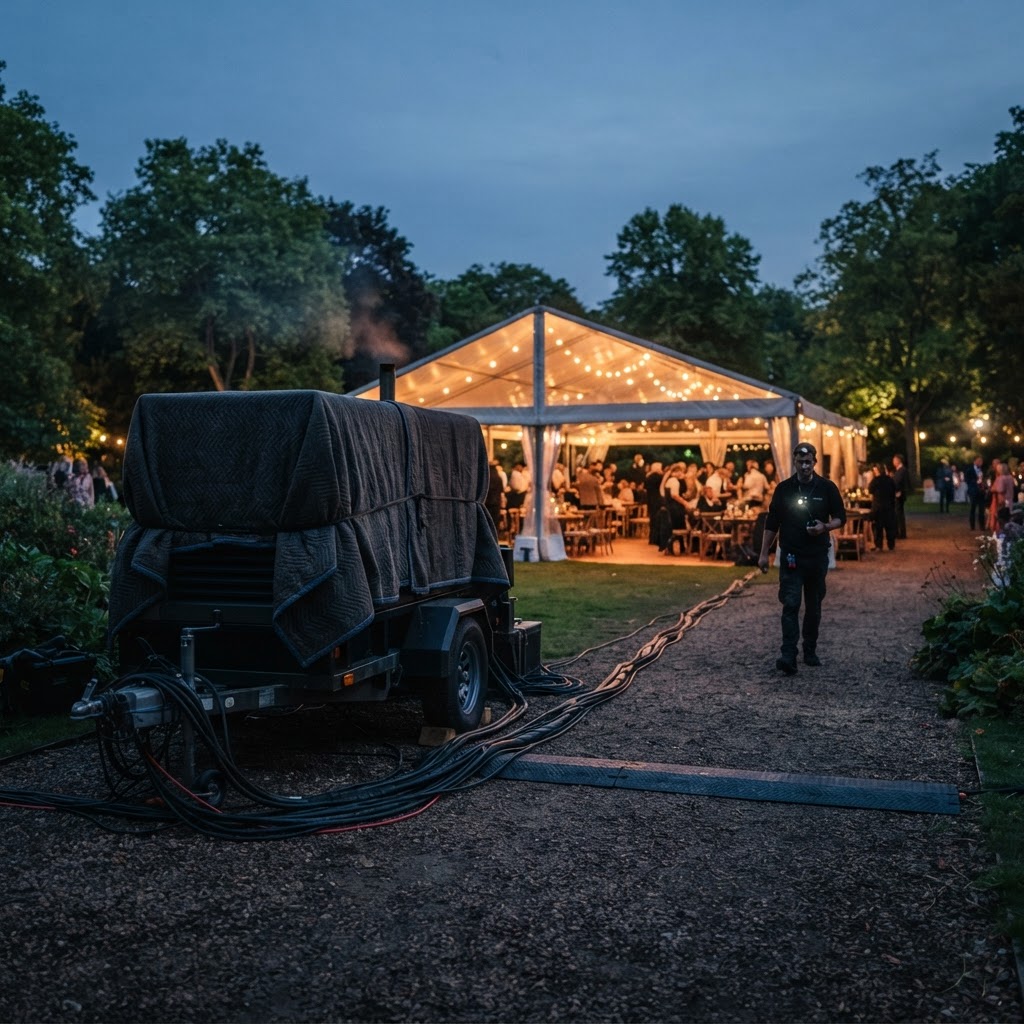
Noise is the detail that gets overlooked until someone's standing next to the generator during vows. A standard diesel unit without sound attenuation runs 75-85 dB at 23 feet — loud enough to be audible during a ceremony or a keynote. Sound-attenuated (
) or
quiet-pack units bring that down to 60-65 dB at the same distance, which is a real, noticeable difference. For anything client-facing — weddings, private events, or corporate keynotes — spec a sound-attenuated unit and place it at least 100 feet from the audience, downwind if possible, with sound blankets as a second layer. Many municipalities also cap generator noise under local ordinance, especially near residential zones, so check permitting requirements before you lock in a rental.
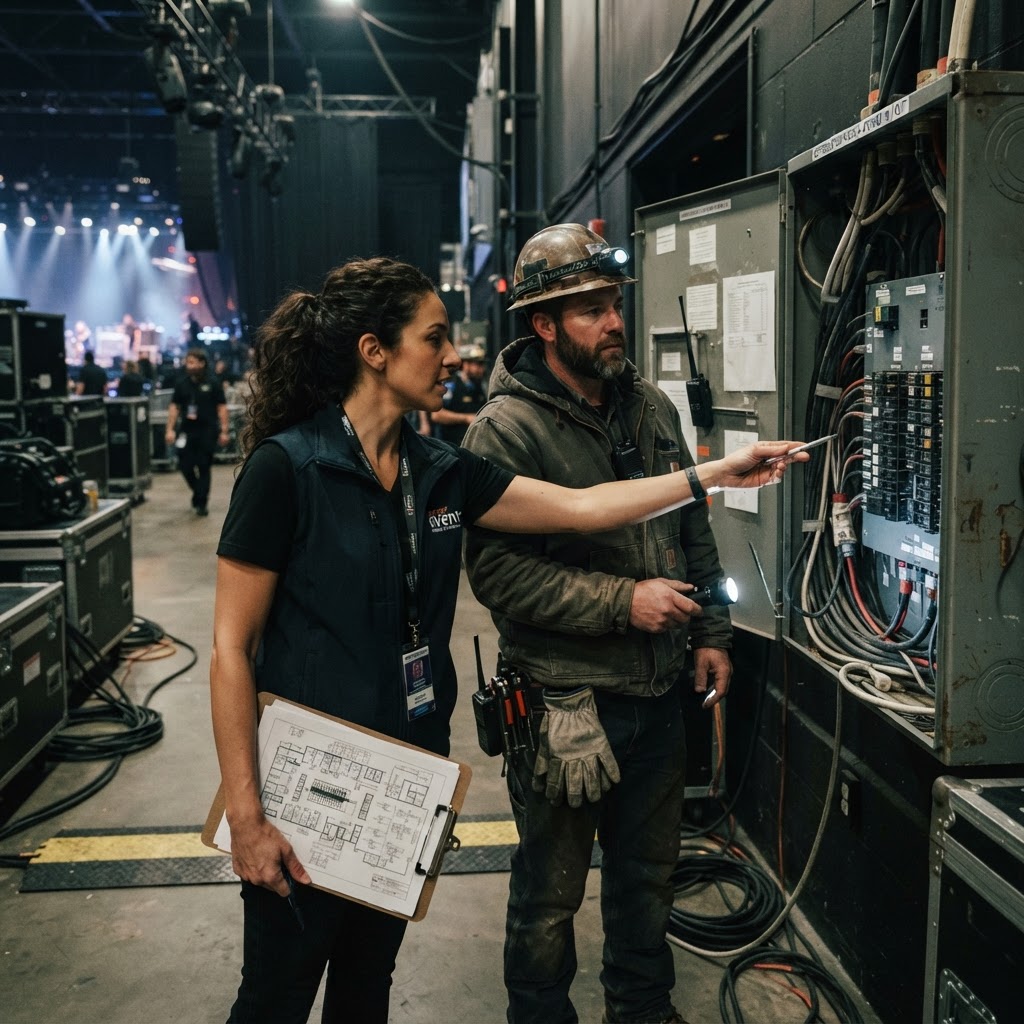
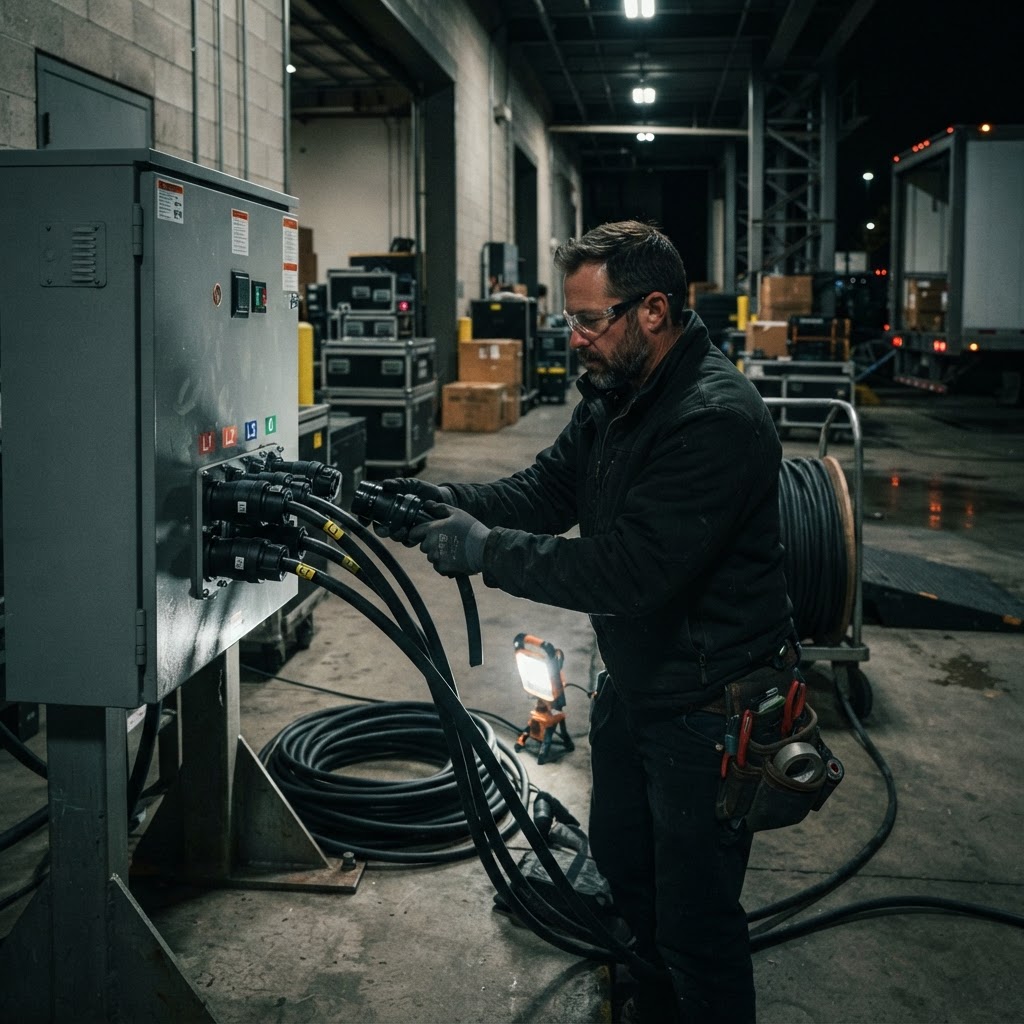
Placement is a rigging and safety conversation as much as an acoustic one. Generators need a level pad, clearance for service access, and enough distance from the tent or stage that diesel exhaust doesn't drift into the guest area — a common complaint at outdoor weddings where the wind shifts mid-ceremony. Cable runs from generator to distro also have a voltage drop limit; runs over 100 feet in undersized cable will cause brightness flicker on lighting rigs and audible hum in audio systems. A production team handling full event production will plan cable gauge and run length as part of the power plan, not as an afterthought once the generator arrives.
Redundancy is worth budgeting for on anything with a hard deadline — a corporate keynote, a fashion show finale, a live broadcast. A single generator failure mid-event isn't a minor inconvenience; it's a blackout during lighting cues or a dead PA during a live music set. The standard fix is an automatic transfer switch paired with a backup unit sized to at least your critical loads — audio, stage lighting, and any recording or streaming gear. It costs more, but it's cheaper than a refund.
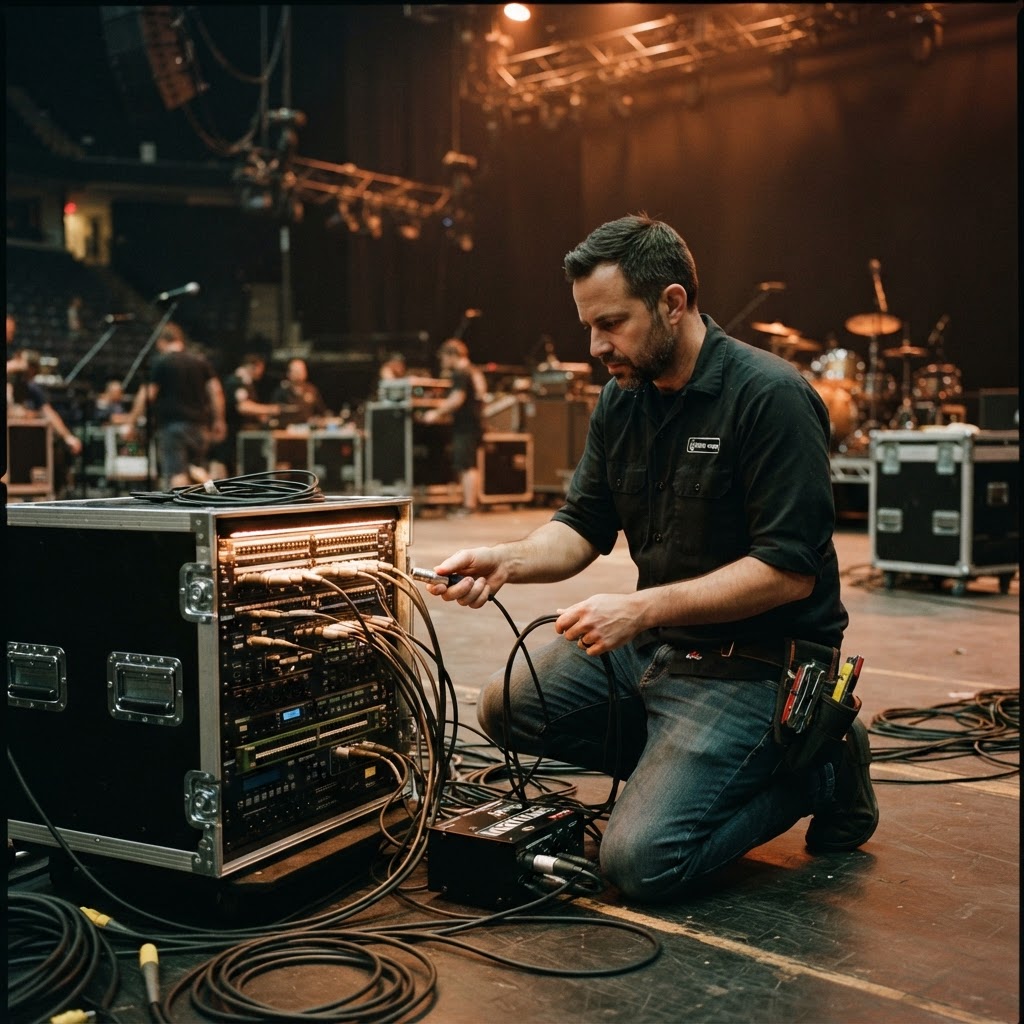
If you're renting AV gear separately from your generator, coordinate the two vendors directly rather than relaying specs through email. Amplifier racks, moving light power supplies, and LED wall processors all have specific inrush and steady-state requirements that your equipment rental provider can hand off to the generator company as a load schedule. For corporate activations and trade show builds where power distribution has to support multiple exhibit zones, this coordination matters even more — a generator undersized by one zone's forgotten load can take down an entire booth on show day. Get the wattage numbers in writing before the trucks show up, and you'll spend the event listening to the band instead of the generator.